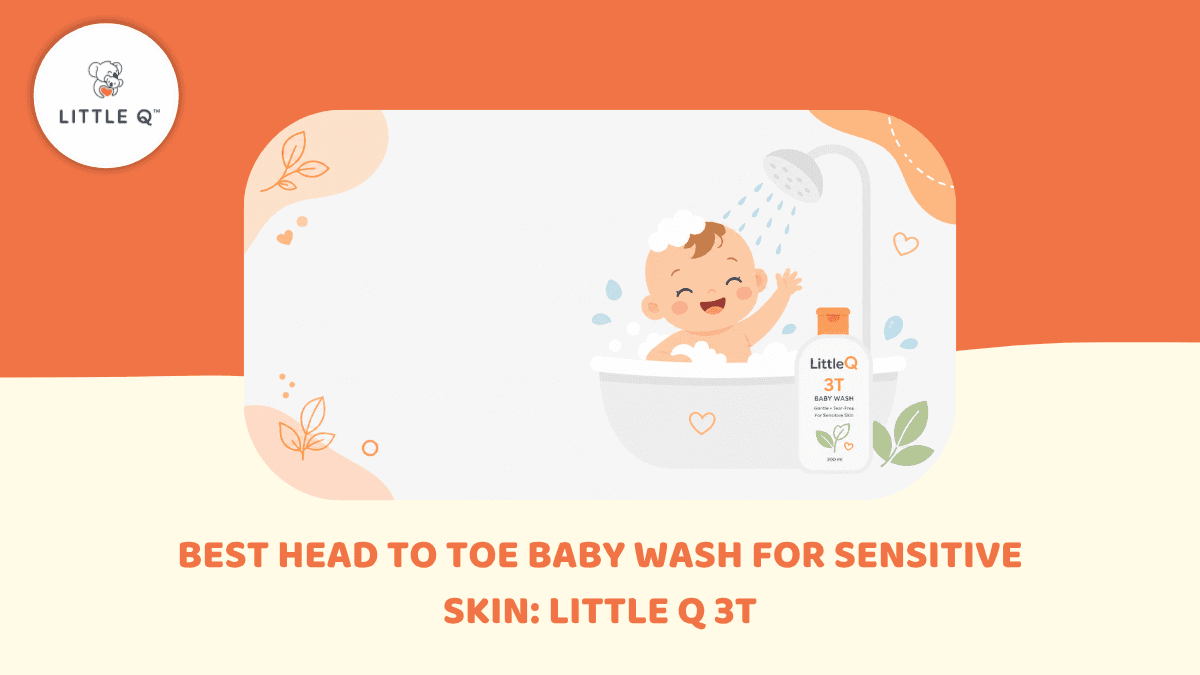

Why Glycerin in Baby Wash: Little Q 3T 24-Hour Hydration
Learn why glycerin in baby wash supports skin hydration and how Little Q 3T combines this humectant with gentle cleansing for soft baby skin.Little Q
Why Glycerin in Baby Wash: Little Q 3T 24-Hour Hydration
Parents often notice that a baby’s skin feels dry or tight after bathing. This may happen because of hot water, frequent bathing, harsh soap, dry air or a cleanser that removes too much natural oil.
One ingredient commonly included in hydrating skincare is glycerin. Understanding glycerin in baby wash can help parents make more informed choices when comparing cleansers for delicate skin.
Glycerin is a humectant, which means it attracts and holds water. Little Q 3T is a head-to-toe syndet cleanser designed for delicate newborn and sensitive skin. Its product information lists mild cleansing agents and hydration-supporting ingredients, including glycerin, Ceramide NP, D-Panthenol, Hyaluronic Acid and Niacinamide.
The formula is intended to cleanse while supporting a comfortable after-bath skin feel. However, parents should understand the difference between hydration support in a rinse-off cleanser and the longer-lasting effect of a leave-on moisturiser.
This guide explains how glycerin works, what “24-hour hydration” should mean in practical terms and how Little Q 3T can fit into a gentle baby skincare routine.
Important note: A cleanser cannot treat eczema, infection or severe dryness. Consult a paediatrician or dermatologist if your baby has persistent redness, cracking, itching, oozing or other concerning symptoms.
What Is Glycerin?
Glycerin, also called glycerol, is a small molecule used in skincare for its humectant properties.
A humectant attracts and holds water. In a skincare formula, glycerin can help increase the water content of the outer layer of the skin, known as the stratum corneum.
Glycerin is widely used in:
Baby washes.
Lotions.
Creams.
Ointments.
Hand creams.
Facial cleansers.
Hair products.
Pharmaceutical preparations.
The Cosmetic Ingredient Review Expert Panel concluded that glycerin is safe as a cosmetic ingredient when used according to established practices and concentrations.
Is Glycerin Natural?
Glycerin can be derived from plant oils, animal fats or manufactured through synthetic processes. The source does not determine whether it is safe. The finished ingredient’s quality, purity and formulation matter more.
Parents should not assume that plant-derived glycerin is automatically better or that synthetic glycerin is unsafe.
How Glycerin Works on Baby Skin
Glycerin supports hydration through its ability to attract and bind water.
A simple example is a sponge. A dry sponge can absorb water and hold it within its structure. Glycerin works differently from a sponge, but the example helps explain the basic idea of holding moisture in the outer skin layer.
Surface Hydration
Glycerin can help increase water content in the stratum corneum. This may make the skin feel:
Softer.
Smoother.
More flexible.
Less tight.
Less rough.
More comfortable after cleansing.
A scientific review of glycerol explains that its humectant properties contribute to skin hydration and that glycerin-containing formulations can increase water content in the stratum corneum.
Supporting Natural Moisturising Factors
The skin naturally contains substances that help attract and retain water. These are called natural moisturising factors.
Cleansing, low humidity and irritation can reduce the skin’s ability to hold moisture. Glycerin may help support water retention within the outer skin layer.
Supporting the Skin Barrier
Glycerin does not act like a lipid or ceramide. It does not form the same type of barrier structure.
However, by improving hydration, glycerin may support the conditions needed for the skin’s natural barrier processes. Research has shown that glycerol can improve skin hydration, although hydration and barrier repair are not exactly the same thing.
Why Baby Skin Needs Hydration
Baby skin is thinner and still developing. The baby skin barrier helps prevent excessive water loss and protects against external irritants, but it may be more vulnerable to heat, friction, dry air and harsh cleansing.
Signs of dryness may include:
Flaking.
Rough cheeks.
Tightness after bathing.
Dry patches on the legs or arms.
Increased sensitivity.
Mild cracking around the hands or feet.
Redness in areas exposed to friction.
Hydration is important because water helps the outer skin remain flexible. However, moisture alone is not enough. The skin also needs lipids such as ceramides, cholesterol and fatty acids to support its barrier structure.
This is why many modern baby products combine humectants, emollients and barrier-support ingredients.
Glycerin in Little Q 3T
The Little Q 3T hydration approach combines mild cleansing with ingredients intended to support a comfortable after-bath feel. The formula lists glycerin alongside Ceramide NP, D-Panthenol, Hyaluronic Acid and Niacinamide.
Glycerin as a Humectant
Glycerin helps attract and hold water. In a rinse-off cleanser, its contact time is limited, but it can still contribute to the formula’s hydration profile.
Ceramide NP as a Barrier Lipid
Ceramide NP supports the lipid structure of the outer skin barrier. It works differently from glycerin.
Glycerin attracts and holds water.
Ceramide NP supports the lipid structure.
D-Panthenol conditions the skin.
Hyaluronic Acid attracts water.
Cleansing agents remove dirt and residue.
Together, these ingredients create a more complete skin-comfort approach than a cleanser that focuses only on foam.
Mild Cleansing Agents
Little Q 3T lists SCI-85, Decyl Glucoside and Sodium Cocoyl Glycinate among its cleansing agents.
These surfactants help remove sweat, excess oil and dirt from the skin and hair. A mild cleansing base is important because glycerin cannot compensate for a cleanser that is excessively harsh.
Glycerin Versus Other Hydrating Ingredients
Glycerin
A humectant that attracts and holds water in the outer skin layer.
Hyaluronic Acid
A humectant that also attracts water and supports hydration.
Ceramide NP
A barrier lipid that supports the structure responsible for moisture retention.
D-Panthenol
A conditioning ingredient that supports a soft, comfortable skin feel.
Oat
A botanical ingredient commonly used in products for dry or sensitive skin.
Occlusives
Ingredients such as petrolatum form a protective layer that helps slow water loss from the surface.
A well-designed baby wash for dry skin may include several types of conditioning ingredients, but a rinse-off product should not be judged by the same standards as a moisturising cream.
What Does 24-Hour Hydration Mean?
The phrase “24-hour hydration” usually refers to a product’s ability to support moisturised skin over an extended period under particular testing conditions.
It should not be interpreted as a guarantee that one bath will keep every baby’s skin hydrated for a full 24 hours.
Hydration depends on:
The baby’s skin condition.
Bathing frequency.
Water temperature.
Climate.
Humidity.
Clothing.
The use of moisturiser.
The formula’s concentration.
The product’s contact time.
The baby’s individual skin response.
Research on glycerin-containing leave-on formulations has demonstrated measurable hydration benefits, including studies where hydration remained elevated after repeated application.
However, those findings cannot automatically be transferred to a rinse-off cleanser. A glycerin baby wash may support hydration and a comfortable after-bath feel, but a leave-on moisturiser may be needed for prolonged dryness.
Benefits of Glycerin in Baby Wash
1. Supports a Softer Skin Feel
Glycerin can help increase water content in the outer skin layer, contributing to skin that feels less rough and tight.
2. Complements Mild Cleansing
A cleanser that combines gentle surfactants with humectants may leave the skin feeling more comfortable than a product focused only on strong cleansing.
3. Supports Dry-Skin Routines
Glycerin may be useful in a baby wash for dry skin when paired with sensible bathing habits and moisturising.
4. Works with Other Hydrating Ingredients
Glycerin can complement Ceramide NP, D-Panthenol and Hyaluronic Acid. These ingredients support different aspects of hydration and barrier care.
5. Suitable for Sensitive-Skin Formulas
Glycerin is widely used in cosmetic products and has a strong safety record when properly formulated.
Individual reactions are still possible, but glycerin is generally considered a well-tolerated cosmetic humectant.
How to Choose a Hydrating Baby Cleanser
Look for Mild Cleansing
A gentle baby cleanser should remove sweat and dirt without making the skin feel stripped.
Consider a Syndet Base
A baby syndet wash uses synthetic detergent surfactants rather than traditional alkaline soap. It may be less drying for some babies.
Check the pH
A pH-balanced baby wash may be more compatible with the skin’s natural surface environment than strongly alkaline soap.
Review the Full Formula
Look for:
Mild surfactants.
Humectants.
Ceramides.
Conditioning ingredients.
Fragrance information.
Preservatives.
Age guidance.
Check for Fragrance
Fragrance may irritate some babies. Parents of babies with eczema or repeated reactions may prefer fragrance-free options.
Understand the Product Type
A wash is rinsed away. A cream or ointment remains on the skin. Choose each product according to the benefit you need.
Practical Routine for Baby Skin Hydration
Use Warm Water
Hot water can remove natural oils and worsen dryness. Use comfortably warm water.
Keep Baths Brief
Many newborns do not need long or daily baths. Short baths can reduce excessive moisture loss and keep the baby comfortable.
Use a Small Amount of Cleanser
More product does not mean better cleansing. Use Little Q 3T according to the current product instructions.
Rinse Thoroughly
Rinse the cleanser from the neck, underarms, groin and other skin folds.
Pat Dry
Use a soft towel and pat the skin dry. Avoid rubbing.
Moisturise Promptly
If dryness is present, apply a suitable baby moisturiser after bath while the skin is still slightly damp.
Thick creams and ointments may be more effective than thin lotions for very dry skin.
Protect the Skin Between Baths
Dress the baby in soft, breathable clothing.
Avoid excessive heat.
Use fragrance-conscious laundry products.
Change wet diapers promptly.
Keep drool-prone areas clean and dry.
Avoid unnecessary scrubbing.
Is Glycerin Safe for Babies?
Glycerin is widely used in cosmetic and pharmaceutical products. The Cosmetic Ingredient Review Expert Panel concluded that glycerin is safe for use in cosmetics under established conditions.
Safety depends on:
Product quality.
Concentration.
Complete formula.
Intended use.
Rinse-off or leave-on format.
Individual sensitivity.
Parents should not apply undiluted glycerin directly to a baby’s skin. Use only products formulated and labelled for babies.
Frequently Asked Questions
Why is glycerin used in baby wash?
Glycerin is a humectant. It attracts and holds water, helping support a softer and more moisturised skin feel.
Does Little Q 3T contain glycerin?
The current Little Q 3T product information lists glycerin among the formula’s hydrating ingredients. Check the latest packaging for the current ingredient list.littleq
Can glycerin prevent dry baby skin?
It may support hydration, but dryness also depends on water temperature, bathing frequency, climate, surfactants and the use of a leave-on moisturiser.
Does glycerin repair the baby skin barrier?
Glycerin supports hydration but does not provide the same structural function as ceramides. Barrier support usually involves gentle cleansing, moisturising and reducing irritation.
Is a glycerin baby wash enough for eczema?
No. A cleanser may support hygiene and comfort, but eczema may require prescribed treatment and a leave-on moisturiser recommended by a healthcare professional.
Is glycerin better than ceramides?
They perform different roles. Glycerin attracts water, while ceramides support the lipid barrier. A formula may benefit from both.
Does 24-hour hydration mean I do not need moisturiser?
No. A wash-off product has limited contact with the skin. If your baby’s skin is dry, a suitable moisturiser may still be needed.
What if my baby reacts to the cleanser?
Stop using it and rinse the skin with clean water. Seek medical advice if the reaction persists, spreads, becomes painful or is associated with swelling or breathing difficulty.
Final Thoughts:
Understanding glycerin in baby wash helps parents distinguish between cleansing, hydration and barrier protection. Glycerin is a humectant that attracts and holds water in the outer skin layer, helping support a softer and more comfortable skin feel.
Little Q 3T combines glycerin with mild syndet surfactants, Ceramide NP, D-Panthenol, Hyaluronic Acid, Niacinamide and botanical ingredients. This makes it a thoughtful option for parents looking for hydration-supporting newborn skincare.
However, a rinse-off cleanser cannot replace a leave-on moisturiser or medical treatment. For the best routine, use warm water, keep baths brief, avoid harsh products and moisturise promptly when dryness is present.
Support Soft, Hydrated Baby Skin
Choose Little Q 3T hydration care for mild, pH-conscious cleansing designed to support comfortable baby skin hydration every day.
Disclaimer: The information in this blog is here to help and inform, but it is not a replacement for advice from a doctor or nutritionist. We try to share correct and useful information, but we always suggest talking to your child’s pediatrician or nutritionist for specific advice about their health and nutrition. These professionals know what’s best for your child’s unique n