
What Is Syndet Wash for Babies? LittleQ 3T Guide
Learn what is syndet wash for babies, how it differs from soap and why LittleQ 3T may suit delicate, dry and sensitive baby skin.Little Q
What Is Syndet Wash for Babies? LittleQ 3T Gentle Formula Guide
Parents often ask, “What is syndet wash for babies, and how does it affect delicate skin?” Unlike traditional soap, a syndet wash is made with synthetic detergent ingredients that help remove dirt while allowing the formula to be adjusted closer to the skin’s natural pH.
This difference is important because infant skin is still developing. The cleanser used during bathing may influence the skin’s moisture, surface pH and overall comfort.
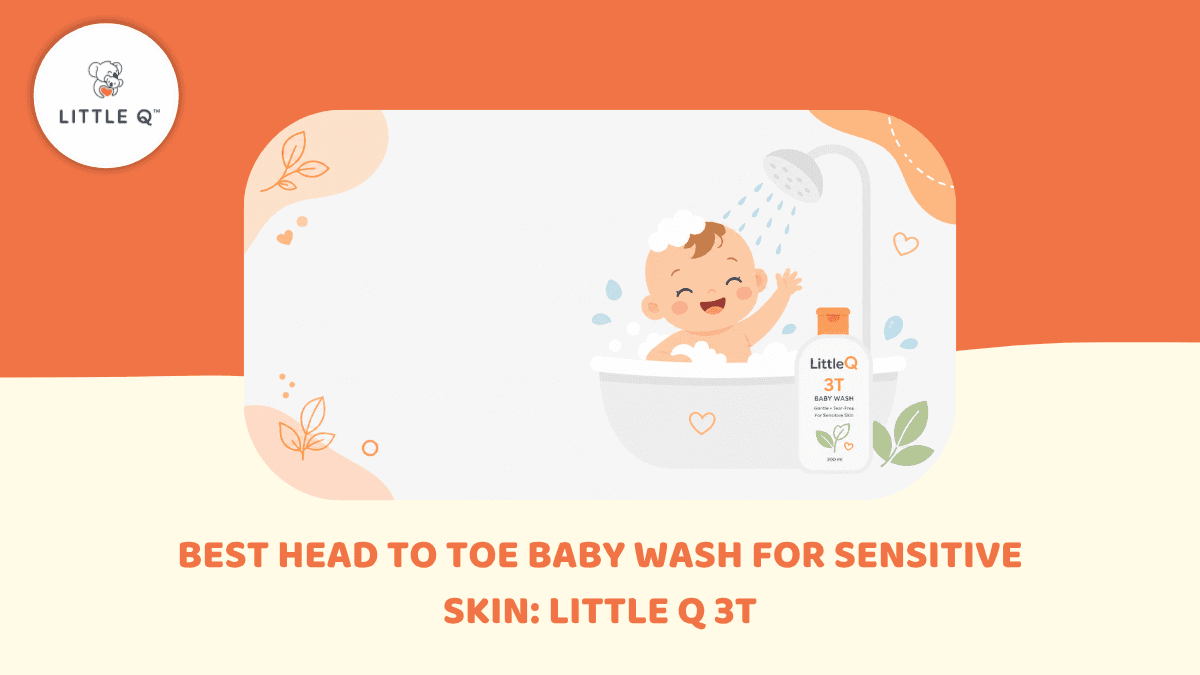
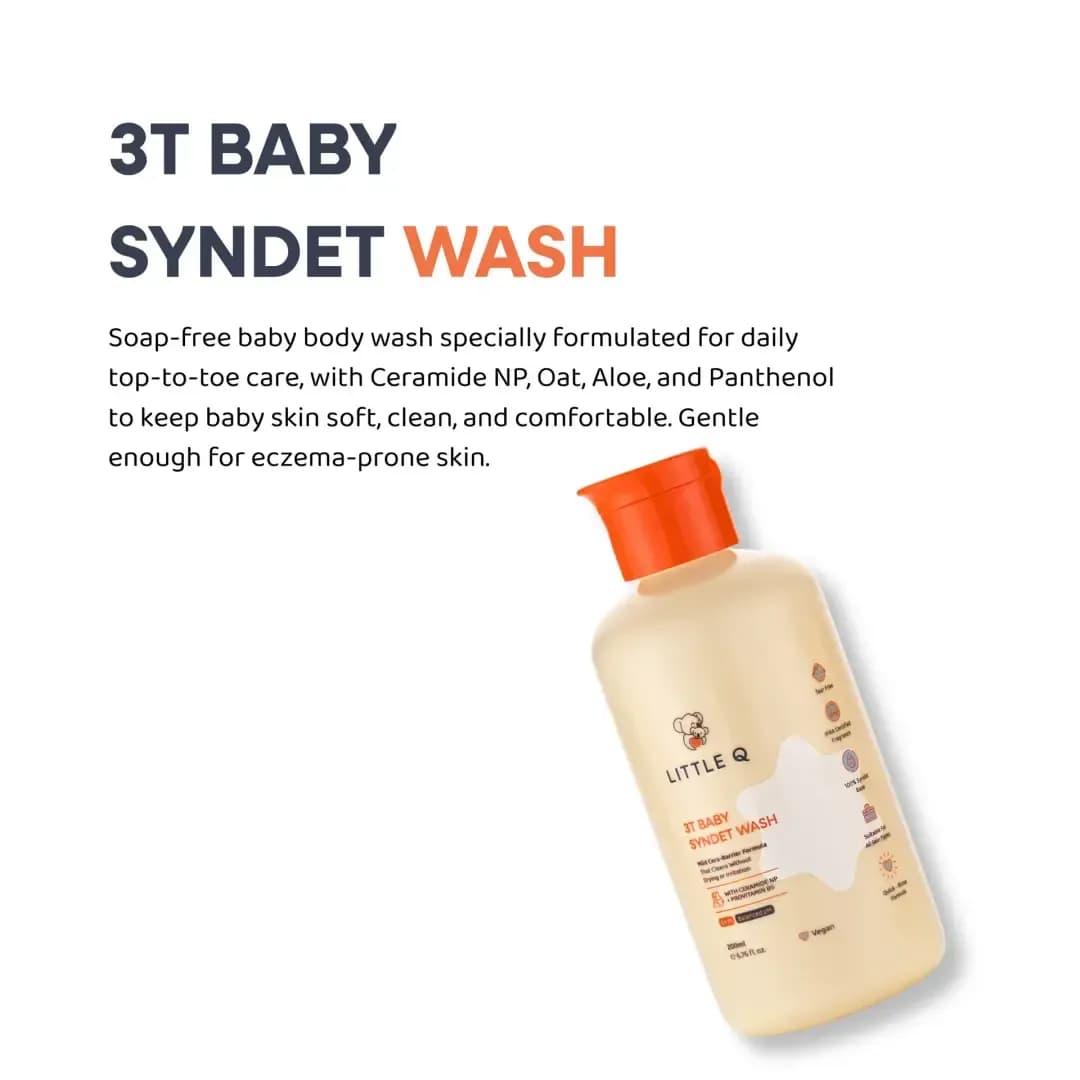
LittleQ 3T is a head-to-toe baby syndet wash formulated for delicate newborn and sensitive skin. Its listed cleansing ingredients include SCI-85, Decyl Glucoside and Sodium Cocoyl Glycinate. The formula also contains Ceramide NP, Niacinamide, D-Panthenol, Hyaluronic Acid, Oat, Calendula, Aloe Vera and Licorice.
How Baby Skin Differs from Adult Skin
Baby skin is not simply a smaller version of adult skin. During infancy, the outer layers of the skin continue to mature and adapt to the environment.
The skin performs several important functions:
Helps reduce water loss.
Protects against external irritants.
Supports temperature regulation.
Provides a surface defence against microorganisms.
Helps maintain hydration.
Supports sensory development.
A newborn’s skin may be more vulnerable to dryness and irritation because its protective barrier is still developing. Heat, frequent bathing, friction, saliva, sweat, urine, stool and unsuitable skincare products can all affect skin comfort.
Important: A cleanser is not a treatment for eczema, infection or severe skin irritation. Always seek professional advice if your baby has persistent, painful or worsening skin symptoms.
The Skin’s Acid Mantle Explained
The acid mantle is a thin, slightly acidic surface environment on the skin. It is influenced by natural oils, sweat and other components of the skin’s surface.
This acidic environment supports several normal skin functions. It helps maintain the activity of certain enzymes involved in barrier development and contributes to a surface environment that is less favourable to the overgrowth of some unwanted microorganisms.
Cleansers can temporarily change the skin’s ph. The amount and duration of this change depend on the product’s formulation, pH, surfactants, contact time and frequency of use.
Traditional soaps are commonly alkaline, while syndet products are often formulated closer to the skin’s mildly acidic-to-neutral range. A review of soap and syndet cleansers report that soap commonly has a pH of approximately 8.5–11, while syndets are often around pH 5.5–7.
Why Alkaline Soap May Be Drying
Alkaline soap can temporarily raise the skin’s surface ph. Repeated use may also remove some surface lipids and natural moisturising factors.
This does not mean that every soap will irritate every baby. It means that babies with dry, sensitive or eczema-prone skin may benefit from a milder cleansing option.
The Indian Academy of Paediatrics recommends an acidic or neutral liquid cleanser for babies because it is less likely to disturb the acid mantle and skin-barrier function.
How Syndet Wash Affects Baby Skin
1. It Removes Dirt Through Surfactant Action
Syndet washes contain surfactants. These molecules have one part that interacts with water and another that interacts with oil and dirt.
When applied to the skin, surfactants help loosen sweat, sebum, food residue and environmental impurities. Water then carries these substances away during rinsing.
A good baby cleanser should clean effectively without removing too much of the skin’s protective oil. The objective is comfortable, practical cleansing—not an excessively stripped or tight feeling.
2. It May Cause Less pH Disturbance
A well-formulated syndet can be adjusted to a pH closer to the skin’s natural environment. This may reduce the degree of pH disturbance compared with strongly alkaline soap.
An infant study comparing an acidic syndet with ordinary soap found that syndet kept the skin pH within the physiological range for longer after washing than ordinary soap.
This is one of the reasons dermatology and paediatric skincare guidance often discusses syndets as alternatives to traditional soap.
3. It May Better Preserve Skin Lipids
The outer skin layer contains lipids that help support moisture retention. Some cleansing agents can remove these lipids more aggressively than others.
Research on soap and syndet cleansing found that repeated washing with soap can damage protein and lipid regions of the outer skin layer, while skin cleansed with syndet showed better preservation of these structures under the study conditions.
However, a syndet is not automatically non-drying. Surfactants can still affect the skin if the formula is too strong, the bath is too long, or the product is used excessively.
4. It Can Support Moisture Retention
When the skin barrier is disturbed, trans epidermal water loss may increase. This means water can escape more easily from the skin’s surface, contributing to dryness.
An appropriately formulated syndet may be less disruptive than alkaline soap. Some products also include humectants, emollients or barrier-support ingredients to improve the after-wash feel.
Little Q 3T lists Ceramide NP, D-Panthenol, Hyaluronic Acid and other conditioning ingredients in its formula. These ingredients support the product’s moisturising and skin-comfort positioning, although the cleanser remains a rinse-off product.
A Closer Look at Little Q 3T’s Formula
SCI-85
SCI-85 is a form of Sodium Cocoyl Isethionate. It is a mild surfactant used in syndet cleansers.
Its main function is to help remove dirt and oil while producing a soft lather. It is not traditional soap and does not rely on the same alkaline soap-making process.
Decyl Glucoside
Decyl Glucoside is a non-ionic surfactant used in gentle cleansing products. It helps lift impurities from the surface of the skin and hair.
It is often used in baby and sensitive-skin formulas, but individual sensitivity is still possible.
Sodium Cocoyl Glycinate
Sodium Cocoyl Glycinate is an amino-acid-based surfactant. It supports mild cleansing and contributes to the product’s rinse and skin-feel properties.
Little Q 3T combines it with other mild surfactants to create a balanced cleansing system.
Ceramide NP
Ceramide NP is a skin-identical lipid associated with the outer skin barrier. Ceramides help support the structure that reduces moisture loss.
In a wash-off product, Ceramide NP should not be treated as equivalent to a leave-on ceramide cream. It is one supportive ingredient within the cleanser’s overall formula.
D-Panthenol
D-Panthenol, or provitamin B5, is used for its moisturising and conditioning properties. It may help leave the skin feeling softer after washing.
It is not a treatment for eczema or infection, but it can complement a mild cleanser.
Hyaluronic Acid and Glycerine
Hyaluronic Acid and Glycerine are humectants. They attract and hold water, supporting a moisturised skin feel.
Because the product is rinsed off, their effect is more limited than in a leave-on lotion. However, they contribute to the formula’s hydration-focused approach.
Oat, Calendula, Aloe Vera and Licorice
These botanical ingredients are included for skin-conditioning and comfort purposes. Oat is commonly used in dry-skin products, while Aloe Vera, Calendula and Licorice are frequent ingredients in soothing cosmetic formulas.
Natural ingredients are not automatically suitable for every baby. Children with known botanical allergies or highly reactive skin should be assessed carefully before using a new product.
When Syndet Cleansing May Be Helpful
A baby syndet wash may be worth considering when a baby experiences:
Tightness after using ordinary soap.
Dry or flaky skin.
Mild sensitivity to fragranced cleansers.
Roughness during winter.
Redness after frequent washing.
A family history of eczema or atopic skin.
Frequent cleansing because of food, sweat or diaper residue.
A cleanser will not prevent every rash. If the baby has persistent itching, cracked skin, oozing, blisters, swelling or severe redness, consult a paediatrician or dermatologist.
Fresh Comparison: Water, Soap and Syndet
Water Alone
Water may be enough for light cleansing during some newborn baths, particularly when the baby is not visibly dirty. It does not, however, dissolve oil-based residue as effectively as a cleanser.
Traditional Soap
Soap can remove dirt effectively but is usually alkaline. It may be drying or irritating for some babies, particularly when used frequently.
Syndet Cleanser
A syndet can combine effective cleansing with a pH and surfactant system designed for greater skin compatibility. The complete formulation determines how gentle it is.
Evidence-based infant skincare recommendations state that appropriately designed liquid cleansers can be well tolerated and do not interfere with the natural maturation of healthy full-term infant skin.
What Parents Should Look for on the Label
Before buying a cleanser, parents should check:
Whether it is specifically intended for infants.
Whether it is soap-free or syndet-based.
Whether the pH is disclosed.
Whether fragrance is included.
Whether the full ingredient list is available.
Whether age guidance is provided.
Whether the packaging includes batch and expiry details.
Whether the product makes realistic, non-medical claims.
Parents should not rely on a single word such as “natural,” “herbal,” “tear-free” or “hypoallergenic.” The complete formulation and the baby’s response matter more than one marketing claim.
Revised FAQ Section
Does syndet wash damage the baby’s skin?
A properly formulated syndet cleanser is designed to be mild, but any cleanser can cause dryness or irritation if it does not suit the baby or is used excessively. Surfactant strength, pH, fragrance and bathing habits all matter.
Does syndet wash change the skin’s pH?
All cleansing products can temporarily influence skin ph. Research suggests that acidic syndets may keep infant skin closer to its physiological pH for longer than ordinary soap.
Can syndet wash protect the skin barrier?
A mild syndet may help reduce unnecessary disruption to the skin barrier compared with alkaline soap. However, it cannot replace moisturising treatment or medical care when the barrier is severely damaged.
Is Little Q 3T suitable for dry skin?
Little Q 3T is marketed for delicate and sensitive skin and includes conditioning ingredients such as Ceramide NP, D-Panthenol and Hyaluronic Acid. Babies with persistent dryness should be assessed by a healthcare professional.
Can syndet wash prevent eczema?
No. It may help reduce exposure to harsh cleansing, but it cannot guarantee eczema prevention. Genetics, immune response, environment and other factors influence eczema.
Final Thoughts: Gentle Science for Delicate Skin
A syndet wash affects baby skin mainly through its cleansing agents, pH and interaction with the skin barrier. Compared with traditional alkaline soap, a well-formulated syndet may cause less disruption to the acid mantle, preserve more surface lipids and support a more comfortable after-bath feel.
Little Q 3T combines mild surfactants with Ceramide NP, D-Panthenol, Hyaluronic Acid, Glycerine, Niacinamide and botanical ingredients such as Oat, Calendula, Aloe Vera and Licorice.
It can be considered as part of a gentle, simple baby skincare routine—but parents should always check the label, introduce products carefully and seek professional advice for ongoing skin concerns.
Choose Little Q 3T for mild, pH-conscious cleansing designed to support soft, comfortable and healthy-looking baby skin.
Disclaimer: The information in this blog is here to help and inform, but it is not a replacement for advice from a doctor or nutritionist. We try to share correct and useful information, but we always suggest talking to your child’s pediatrician or nutritionist for specific advice about their health and nutrition. These professionals know what’s best for your child’s unique needs.