
Traveling with Baby: LittleQ 3T Portable Wash Guide
Traveling with a baby? Learn how portable baby wash LittleQ 3T simplifies hygiene with gentle head-to-toe cleansing for sensitive baby skin.Little Q
Traveling with Baby: Little Q 3T Portable Head-to-Toe Wash
Traveling with a baby requires thoughtful planning, especially when it comes to hygiene and skincare. Parents need to pack enough diapers, clothing, feeding supplies and medicines without carrying an unnecessarily large collection of toiletries. A portable baby wash can make this easier by combining essential cleansing steps in one convenient product.
Little Q 3T is a head-to-toe baby syndet wash designed for delicate newborn and sensitive skin. Its listed cleansing agents include SCI-85, Decyl Glucoside and Sodium Cocoyl Glycinate. The formula also contains Ceramide NP, Niacinamide, D-Panthenol, Hyaluronic Acid, Oat, Calendula, Aloe Vera and Licorice.
Whether you are visiting family, taking a road trip, staying in a hotel or travelling by air, a simple cleanser can help maintain a familiar routine away from home.
This guide explains how to pack Little Q 3T, how to plan baby bath while traveling, what to carry in a baby skincare kit and how to protect delicate skin during a journey.
Important note: Travel and healthcare requirements vary. Check your airline’s current rules, accommodation facilities and your healthcare professional’s advice before travelling with a newborn or baby with a medical condition.
Why a Portable Baby Wash Helps While Traveling
Travel can disrupt a baby’s normal routine. Water quality, climate, sleeping arrangements, food, clothing and bathing facilities may all be different from home.
Carrying the same cleanser used at home may provide familiarity and reduce the need to experiment with an unfamiliar hotel product.
Fewer Bottles to Pack
A head-to-toe baby wash may be used for the scalp, hair and body according to the label. This can reduce the need to pack separate shampoo, body wash and soap.
Fewer products mean:
Less luggage.
Less bathroom clutter.
Fewer bottles to leak.
A simpler bath routine.
Easier packing for short trips.
Less exposure to unfamiliar products.
Familiarity for the Baby
Babies may be unsettled by changes in environment. Continuing with a familiar cleanser can help parents maintain a sense of routine.
A familiar product does not guarantee that the baby will remain irritation-free, but it avoids introducing a new formula during an already busy journey.
Convenient for Short and Long Trips
For a short family visit, parents may need only a small quantity of cleanser. For a longer holiday, a full-size bottle may be more economical and convenient.
The Little Q 3T product is available in a 200 ml size, according to the product listing. Parents should choose the size that suits the length of the trip and check the latest packaging before purchase.
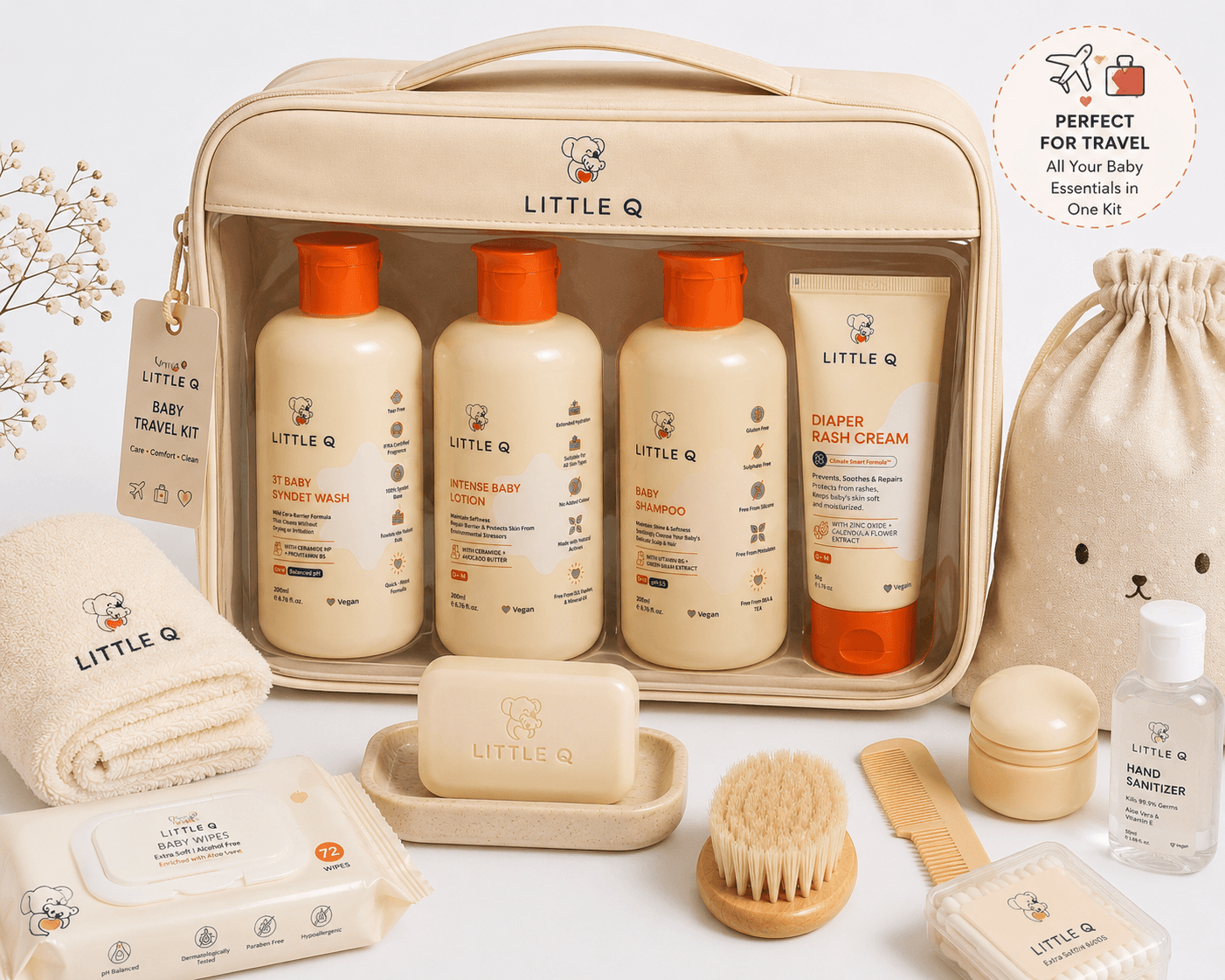
What to Pack in a Baby Skincare Travel Kit
A practical baby skincare travel kit does not need to contain every baby product available. Focus on the items your child regularly uses.
Core Bath Items
Pack:
Little Q 3T.
A soft washcloth.
A clean cotton towel.
A small changing mat.
A fragrance-conscious moisturiser.
Diaper cream if regularly used.
A small comb or soft brush.
A waterproof bag for wet clothing.
Diapering Supplies
Carry enough diapers for the journey, plus extra supplies in case of delays. Include:
Diapers.
Wipes or cotton wool.
Diaper cream.
Disposable bags for used diapers.
Spare clothing.
Hand sanitiser for the parent.
A portable changing pad.
Allianz’s infant travel checklist recommends carrying diapers, diaper cream, wipes, a changing pad, spare clothing and wet bags, while also listing baby shampoo or wash among checked-luggage items.
Health and Comfort Items
Depending on your baby’s age and healthcare advice, consider:
Thermometer.
Prescribed medicines.
Feeding supplies.
Burp cloths.
Muslin cloths.
Pacifier, if used.
Sun hat.
Weather-appropriate clothing.
Baby carrier or sling.
Familiar blanket or comfort item.
Do not give medicines or apply medical products without following professional guidance.
Why Little Q 3T May Suit Travel
Head-to-Toe Format
Little Q 3T is marketed as a head-to-toe cleanser for scalp, hair and body.
This is useful when the destination has limited bathroom storage or when parents are trying to keep luggage light. One product can help reduce the number of containers required during the trip.
Syndet Cleansing
A baby syndet wash uses synthetic detergent ingredients rather than traditional alkaline soap.
Little Q 3T lists SCI-85, Decyl Glucoside and Sodium Cocoyl Glycinate among its cleansing agents. These surfactants help lift sweat, dirt and excess oil from the skin and hair.
A syndet cleanser may be preferable for babies with delicate skin because it can be formulated at a neutral or mildly acidic pH. However, the complete formula and the baby’s individual tolerance still matter.
pH-Balanced Positioning
Little Q 3T is described as a pH-balanced baby wash.
Travel may expose the baby to different water sources and climates. A pH-conscious cleanser can support a consistent routine, although pH alone does not guarantee that a product will suit every baby.
Parents should continue to observe the baby’s skin for dryness, redness or discomfort.
Skin-Conditioning Ingredients
Little Q 3T includes Ceramide NP, D-Panthenol, Hyaluronic Acid, Niacinamide and botanical ingredients.
Ceramides are associated with the outer skin barrier, while D-Panthenol and humectants such as Hyaluronic Acid support the formula’s conditioning and hydration profile.
Because Little Q 3T is a rinse-off product, it should not replace a leave-on moisturiser when the baby’s skin is dry.
Tear-Free Positioning
The product is described as a tear-free baby wash. This means it is designed to reduce discomfort if the cleanser accidentally approaches the eyes.
Parents should still avoid deliberately putting cleanser into the eyes. Rinse with clean water if accidental contact occurs.
Preparing for Baby Bath While Traveling
Bath facilities vary from one location to another. A hotel may have a deep bathtub, a family home may have a sink or bucket, and a campsite may have very limited water access.
Inspect the Bathing Area
Before bathing the baby, check:
Whether the surface is stable.
Whether the room is warm.
Whether the water source is safe.
Whether there is enough space.
Whether all supplies can remain within reach.
Whether the tub or sink has been cleaned.
Do not place the baby in an unfamiliar bath surface until it has been checked carefully.
Use a Familiar Bathing Method
If your baby usually has a sponge bath, continue with a sponge bath during travel. If your baby is accustomed to a small baby tub, consider carrying a foldable travel tub if practical.
The method may change depending on the destination, but supervision must remain constant.
Keep Baths Short
Travel can make babies tired and overstimulated. A short bath is usually more practical than a long one.
The Indian Academy of Pediatrics recommends keeping baths for babies with sensitive skin brief, generally around 5–10 minutes, using lukewarm water and avoiding hot baths.
Bring Your Own Towel
Hotel towels may be rough, heavily fragranced or washed with detergents that do not suit the baby. A familiar cotton towel can be softer and more reassuring.
It also helps parents dry skin folds properly after the bath.
Travelling by Air with Baby Wash
Air travel adds an extra packing consideration because baby wash is a liquid.
Airline and airport rules may differ by country, airport and route. Check the current requirements before travelling.
Useful air-travel tips include:
Keep the amount you need during transit in your carry-on.
Place liquids in a clear, resealable bag if required.
Keep the original label visible.
Use a leakproof pouch.
Pack extra diapers and clothing in the carry-on.
Do not transfer the product into an unlabelled container.
Check whether baby liquids receive special exemptions.
Review your airline’s current policy before departure.
Allianz recommends keeping key baby supplies such as diapers, wipes, changing equipment, food and spare clothing accessible during air travel.
Preventing Leaks
To reduce leakage:
Tighten the cap securely.
Place the bottle inside a sealed plastic pouch.
Wrap it in a towel or clothing item.
Keep it away from electronics.
Avoid overfilling travel containers.
Check the bottle after changes in air pressure.
A product leak can damage clothing, documents and electronic items, so double protection is worthwhile.
Travelling by Road
Road travel allows parents to carry more items, but the baby’s bath routine may still be interrupted.
Plan Stops
Choose stops where you can:
Change the diaper.
Feed the baby.
Check the temperature.
Clean food or spit-up.
Change wet clothing.
Give the baby a break from the car seat.
A full bath may not be necessary during the journey. Use a soft cloth to clean specific areas and complete the bath at your destination.
Protect the Baby from Heat
Hot weather can increase sweat and prickly heat. Keep the baby in breathable clothing and never leave the baby alone in a parked vehicle.
If the baby has been sweating heavily, wipe the skin folds and change damp clothing. Do not increase bathing excessively if the skin is already dry.
Travelling to a Different Climate
Hot and Humid Weather
In hot climates, sweat may collect around the neck, underarms and diaper area. Clean these areas gently and keep them dry.
Avoid adding strongly fragranced powders or multiple new products. More products may increase irritation rather than prevent it.
Cold and Dry Weather
Cold, dry air may make the skin feel rough or tight. Keep baths brief and avoid very hot water, which can increase dryness.
A suitable moisturiser may be helpful if dryness develops. Discuss persistent dryness with a healthcare professional.
High-Altitude Travel
At high altitude, air may be colder or drier and travel may affect feeding or sleep. Focus on warmth, hydration as advised by your healthcare professional and a familiar routine.
Choosing Products for Sensitive Baby Skin
When selecting a baby wash for sensitive skin, review more than the product name.
Look for Mild Cleansing
A soap-free syndet cleanser may be more suitable than traditional alkaline soap. The full surfactant system determines the cleansing experience.
Check the pH
A neutral or mildly acidic cleanser may be more compatible with the baby’s natural skin environment.
Review Fragrance
Fragrance may irritate some babies. The Royal Children’s Hospital recommends choosing products free from fragrance, botanicals and antibacterial agents where possible.
Avoid Introducing Products During Travel
Travel is not the ideal time to experiment with a completely new cleanser, lotion or laundry detergent. If possible, use products the baby has already tolerated at home.
Pack the Complete Label
If the product is decanted for travel, keep the original packaging or a clear photograph of the ingredient and usage information. For air travel, follow local liquid restrictions.
Safety Tips for Travelling Parents
Never leave a baby alone near water.
Do not bathe the baby in an unstable sink.
Check the water temperature every time.
Keep electrical items away from water.
Do not use hotel bubble bath or adult toiletries.
Keep the cleanser away from the baby’s eyes and mouth.
Dry skin folds carefully.
Avoid very hot water.
Keep medicines in their original packaging.
Carry emergency contact information.
Know where the nearest healthcare facility is.
Follow local medical advice for newborns.
Frequently Asked Questions
Is Little Q 3T suitable for travel?
Little Q 3T may be convenient for travel because it is designed as a head-to-toe cleanser. Parents should pack it securely and follow airline or transport rules for liquids.
Can I use Little Q 3T in hotel baths?
It may be used according to the product directions, provided the bathing surface is clean and stable. Never leave the baby unattended, and check the water temperature before bathing.
Should I pack full-size or travel-size baby wash?
Choose the size according to the length of your trip and the transport rules. A smaller bottle may be convenient for air travel, while a full-size bottle may suit longer road trips.
Is a syndet wash better for travel?
A baby syndet wash may be convenient because it can provide mild cleansing without requiring separate soap and shampoo products. The formula must still suit your baby’s skin.
How many baths does a baby need while travelling?
Travel does not automatically require more baths. Use a full bath when needed and clean the face, neck, hands and diaper area between baths.
Can climate changes irritate a baby’s skin?
Yes. Heat, humidity, cold, dry air, sweat and changes in water may affect skin comfort. Keep the routine simple and monitor the baby’s skin.
What if my baby develops a rash while travelling?
Stop any newly introduced product and seek medical advice if the rash persists, spreads, becomes painful or is accompanied by fever, swelling or breathing difficulty.
Is Little Q 3T tear-free?
The product is described as a tear-free baby wash. Parents should still avoid deliberate eye contact and rinse with clean water if contact occurs.
Final Thoughts: Pack Gentle Care for Every Journey
Travelling with a baby becomes easier when the skincare routine is simple, familiar and well organised. A portable baby wash such as Little Q 3T can help parents reduce luggage by combining gentle cleansing for the scalp, hair and body in one product.
Little Q 3T uses mild surfactants and includes ingredients such as Ceramide NP, D-Panthenol, Hyaluronic Acid, Oat, Calendula, Aloe Vera and Licorice. Its syndet, pH-balanced and head-to-toe positioning may make it a practical option for families who want consistent baby care away from home.littleq
Pack the essentials, check travel rules, keep bath time brief and never compromise on supervision. The goal is not to recreate every detail of your home bathroom. It is to give your baby clean, comfortable care wherever your journey takes you.
Add Little Q 3T baby wash to your baby travel essentials and make every destination feel a little more familiar. One gentle cleanser, less luggage and more confident travel-time care.
Disclaimer: The information in this blog is here to help and inform, but it is not a replacement for advice from a doctor or nutritionist. We try to share correct and useful information, but we always suggest talking to your child’s pediatrician or nutritionist for specific advice about their health and nutrition. These professionals know what’s best for your child’s unique needs.