
Top Ingredients in LittleQ 3T Syndet Wash Moms Trust for Safety
Explore the gentle ingredients in LittleQ 3T syndet wash, including mild cleansers, ceramides, panthenol and oat for delicate baby skin.Little Q
Top Ingredients in LittleQ 3T Syndet Wash Moms Trust for Safety
Choosing the right baby cleanser is an important part of newborn skincare. Babies have delicate skin that is still developing, so parents often look for products that clean gently without causing dryness, tightness or discomfort.
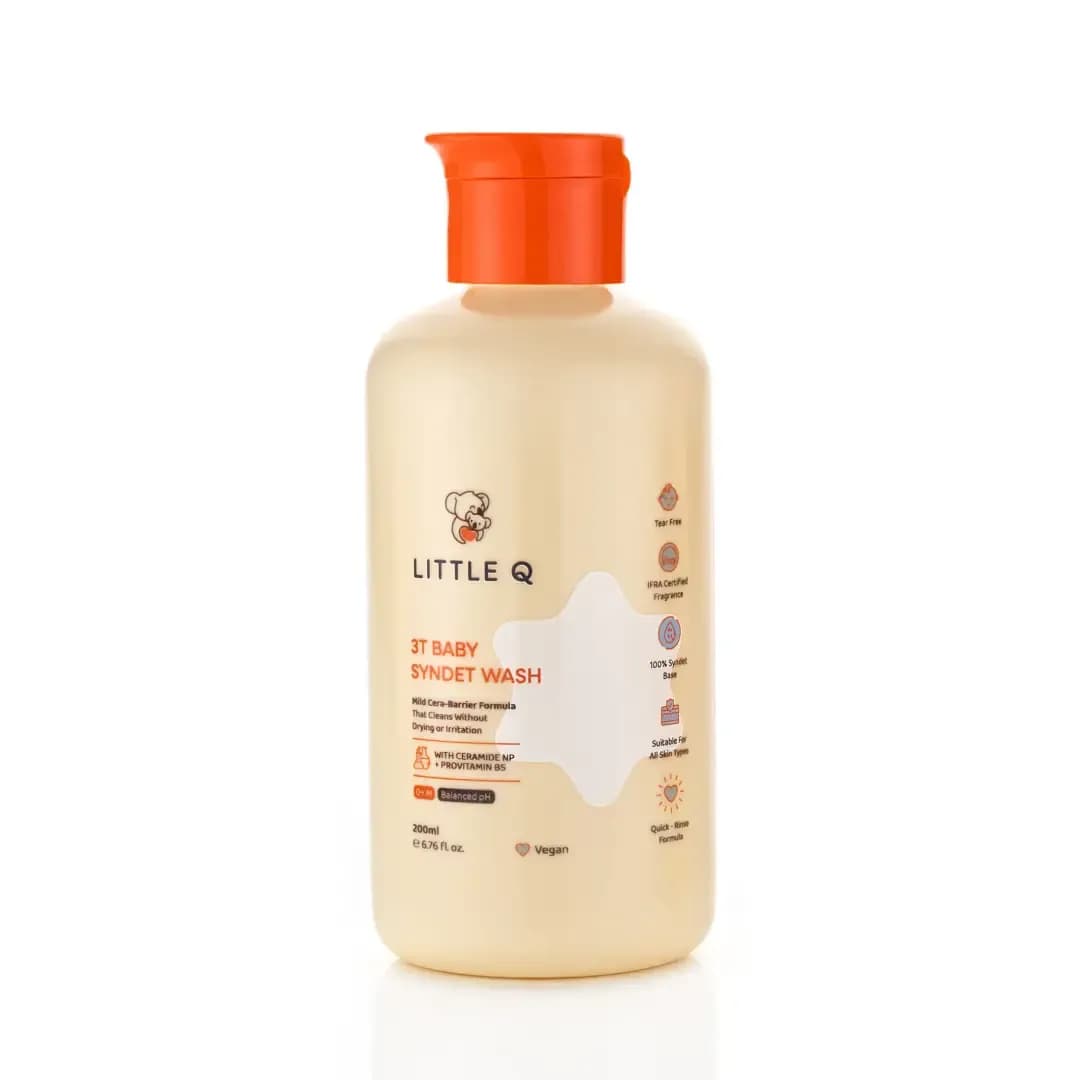
The Little Q 3T syndet wash is formulated as a mild, head-to-toe cleanser for babies and sensitive skin. Its listed ingredients include gentle cleansing agents such as SCI-85, Decyl Glucoside, Sodium Cocoyl Glycinate and SMCT. The formula also contains Ceramide NP, Niacinamide, D-Panthenol, Hyaluronic Acid, Glycerine, Oat, Calendula, Aloe Vera and Licorice.
Each ingredient has a specific role in the formula. Some help cleanse, while others support hydration, skin comfort and the baby skin barrier. This article explains these ingredients in simple language so parents can make a more informed choice.
Important note: Ingredient benefits depend on the complete formulation, concentration and contact time. A wash-off product is primarily a cleanser and should not be considered a medical treatment for eczema, infection or persistent rashes.
Why Baby-Wash Ingredients Matter
Baby skin is thinner and more sensitive than adult skin. During the first months of life, its protective barrier continues to mature. This can make it more vulnerable to dryness, friction, heat, allergens and irritating products.
For this reason, a baby wash for sensitive skin should focus on mild cleansing rather than excessive foam or a strong “squeaky-clean” feeling. Skin that feels tight immediately after bathing may be showing signs that the cleansing routine is too harsh or too frequent.
When reviewing baby wash ingredients, parents should consider:
The type of cleansing agents used.
Whether the product is soap-free.
Whether the formula supports a skin-friendly ph.
The presence of moisturising ingredients.
Added fragrance, dyes and essential oils.
The baby’s personal history of allergies or skin reactions.
Clear labelling and age-appropriate directions.
No single ingredient can guarantee that a product will suit every baby. The complete formula and the individual child’s response are both important.
What Is a Syndet Wash?
“Syndet” is short for synthetic detergent. A syndet cleanser uses specially selected cleansing agents instead of traditional alkaline soap.
A syndet wash for babies is often selected because it is designed to cleanse while being gentle on the skin’s surface. A well-formulated syndet product may help reduce the dry, tight feeling associated with some conventional soaps.
The Little Q 3T syndet wash is presented as a soap-free and pH-balanced cleanser for head-to-toe baby care. However, “syndet” by itself does not mean that a formula will suit every child. Parents should still review the full ingredient list and watch for individual sensitivity.
Gentle Cleansing Ingredients in Little Q 3T
1. SCI-85
SCI-85 is a form of Sodium Cocoyl Isethionate, a mild surfactant frequently used in syndet bars and liquid cleansers.
Surfactants help water mix with oil and dirt so that impurities can be rinsed away. SCI is valued in gentle cleansing formulas because it can provide a soft, creamy lather without relying on traditional soap.
For a baby product, the goal is not to remove every trace of natural oil from the skin. The goal is to clean visible dirt, sweat and residue while maintaining comfort.
The product page lists SCI-85 as one of the primary cleansing agents in Little Q 3T.
2. Decyl Glucoside
Decyl Glucoside is a non-ionic surfactant commonly used in mild and plant-derived cleansing products. It helps lift dirt and excess oil from the skin and hair.
Parents searching for a gentle baby cleanser may recognise Decyl Glucoside in products designed for delicate or sensitive skin. It is often selected for its mild cleansing profile and ability to work well alongside other surfactants.
However, even mild ingredients can cause a reaction in some children. A baby’s individual sensitivity is more important than the ingredient’s popularity or marketing description.
3. Sodium Cocoyl Glycinate
Sodium Cocoyl Glycinate is an amino-acid-based cleansing agent. It contributes to the formula’s ability to remove sweat, dirt and everyday residue without requiring vigorous rubbing.
This ingredient is combined with SCI-85 and Decyl Glucoside in Little Q 3T. Using multiple mild surfactants can help balance cleansing strength, foam and rinse performance.
A gentle cleanser should leave the skin feeling clean but not excessively tight, rough or “stripped.”
4. SMCT
SMCT is also listed among the gentle cleansing agents in the formula. It contributes to the overall cleansing system and works with the other surfactants.
Parents do not need to memorise every technical ingredient name. A more practical approach is to look for:
A transparent ingredient list.
A formula made specifically for babies.
Mild, soap-free cleansing.
Suitable pH information.
Clear manufacturer details.
Appropriate safety and usage directions.
Hydrating Ingredients in Little Q 3T
5. Glycerine
Glycerine is a humectant. Humectants attract and help hold water, supporting a moisturised skin feel.
It is one of the most widely used hydration-supporting ingredients in skincare. In a baby cleanser, glycerine can help reduce the dry feeling that may occur after washing.
Because body wash is rinsed off, glycerine should not be treated as a substitute for a leave-on moisturiser. If a baby has visibly dry skin, a suitable fragrance-free moisturiser may also be needed.
6. Hyaluronic Acid
Hyaluronic Acid is another humectant used to support hydration. It can hold water within the skin’s surface layers and is commonly found in products intended to improve a soft, moisturised feel.
Little Q 3T lists Hyaluronic Acid among its hydrating ingredients. Its presence complements glycerine and other conditioning ingredients in the formula.
The concentration and type of Hyaluronic Acid are not fully explained on the product page, so parents should avoid if a wash-off product will provide the same benefits as a leave-on serum or cream.
7. Aloe Vera
Aloe Vera is commonly used in skincare for its refreshing, moisturising and soothing properties. It can help support a comfortable after-bath feeling.
In Little Q 3T, Aloe Vera is included with other hydration and skin-comfort ingredients. It is important to remember that botanical ingredients may not suit every baby, particularly those with known plant allergies or highly reactive skin.
8. D-Panthenol
D-Panthenol, also known as provitamin B5, is a conditioning ingredient used in many skincare and haircare products.
It helps support a soft, moisturised skin feel and may be especially useful in a mild baby body wash designed for frequent cleansing. D-Panthenol is not a medicine, but it can contribute to the formula’s overall skin-conditioning profile.
Skin-Barrier-Support Ingredients
9. Ceramide NP
Ceramides are naturally occurring lipids found in the outer layer of the skin. They help form a protective barrier that supports moisture retention and protects against external irritants.
Ceramide NP is included in the Little Q 3T syndet wash. This is a notable ingredient for parents interested in products that support the baby skin barrier.
However, a wash-off product has limited contact time. It should not be compared directly with a leave-on ceramide moisturiser. Instead, it can be viewed as one part of a gentle, barrier-conscious skincare routine.
10. Niacinamide
Niacinamide is a form of vitamin B3. In skincare, it is commonly used to support conditioning, hydration and the appearance of a healthy skin barrier.
Little Q 3T lists Niacinamide among its skin-supporting ingredients. It is generally valued for its versatility, but individual reactions are still possible.
If a baby develops redness, itching, swelling or worsening dryness after using any new product, parents should discontinue it and seek appropriate advice.
Botanical Skin-Comfort Ingredients
11. Oat Extract
Oat is a familiar ingredient in products for dry and sensitive skin. It is used for its moisturising and soothing properties.
Oat extract can help support a comfortable skin feel, particularly when the skin is prone to dryness. Little Q 3T includes Oat as part of its skin-comfort blend.
Parents should note that oat extract in a cleanser is not the same as a prescribed treatment for eczema. Babies with known oat allergies should be assessed before using products containing oat.
12. Calendula
Calendula is a botanical extract traditionally used in soothing skincare products. It is included in Little Q 3T as a skin-comfort ingredient.
Although many families associate Calendula with gentle care, botanical ingredients can still cause irritation or allergy in sensitive individuals. “Natural” does not automatically mean allergy-free.
13. Licorice
Licorice extract is another botanical ingredient listed in Little Q 3T. It is commonly used in cosmetic formulations for skin conditioning and comfort.
Since the cleanser is rinsed off, Licorice should be understood as part of the formula’s supporting ingredient blend rather than a treatment for inflammation, pigmentation or infection.
Ingredients Parents May Prefer to Avoid
When choosing a soap-free baby wash, many parents prefer to limit unnecessary ingredients that may irritate delicate skin.
Depending on the baby’s individual needs, parents may wish to be cautious with:
Strong added fragrances.
Essential oils.
Artificial colours.
Harsh cleansing systems.
Antibacterial ingredients without medical advice.
Excessive numbers of fragranced products used together.
Products without a complete ingredient list.
How to Read a Baby-Wash Label
A product label can provide useful information before purchase. Look for:
Product Purpose
Check whether the product is intended for babies, newborns, sensitive skin, hair, face or body. A pH-balanced baby wash marketed for head-to-toe use may offer convenience, but the label should always confirm the intended application.
Ingredient Order
Cosmetic ingredients are generally listed in descending order of concentration, although ingredients present at low levels may appear differently. Parents should avoid judging a product only by the position of one “hero ingredient.”
Product Claims
Claims such as “tear-free,” “soap-free,” “sulfate-free” or “dermatologically tested” can be helpful, but they should be read alongside the ingredient list and directions.
Manufacturer Information
Reliable packaging should provide manufacturer details, batch information, expiry or period-after-opening guidance, and customer-care contact information.
Frequently Asked Questions
What are the main cleansing ingredients in Little Q 3T?
The product lists SCI-85, Decyl Glucoside, Sodium Cocoyl Glycinate and SMCT as gentle cleansing agents.
Which ingredients support hydration?
Glycerine, Hyaluronic Acid, Aloe Vera and D-Panthenol are listed as hydration-supporting ingredients.
Does Little Q 3T contain ceramides?
Yes. The formula lists Ceramide NP, an ingredient associated with supporting the skin’s protective barrier.
Is Little Q 3T a soap-free baby wash?
Yes. The product is presented as a soap-free syndet cleanser.
Can these ingredients treat eczema?
No. The formula may be used as part of a gentle cleansing routine, but it should not be considered a treatment for eczema, infection or a persistent rash. Consult a paediatrician or dermatologist for ongoing symptoms.
Are botanical ingredients always safe for babies?
No. Aloe Vera, Oat, Calendula and Licorice may be well tolerated by many people, but any botanical ingredient can cause a reaction in a sensitive individual.
What if my baby develops irritation?
Stop using the product and seek medical advice if the reaction persists, spreads or becomes severe. Urgent medical care is needed for facial swelling, breathing difficulty or widespread hives.
Final Thoughts: Soft Skin, Sweet Smiles
The Little Q 3T syndet wash combines mild cleansing agents with hydration-focused and skin-comfort ingredients. SCI-85, Decyl Glucoside, Sodium Cocoyl Glycinate and SMCT help cleanse gently, while Ceramide NP, Niacinamide, D-Panthenol, Hyaluronic Acid, Glycerine, Oat, Calendula, Aloe Vera and Licorice support the formula’s moisturising and barrier-conscious approach.
For parents comparing baby wash ingredients, the most important consideration is the complete formula—not just one highlighted ingredient. A gentle, soap-free cleanser with clear labelling can support a simple newborn skincare routine, but it should never replace medical care for persistent or severe skin problems.
Choose Gentle Ingredient-Based Care
Give your baby’s delicate skin a thoughtful cleansing experience with the LittleQ 3T syndet wash. Explore its gentle ingredient blend and make informed skincare choices for softer, happier bath-time moments.
Disclaimer: The information in this blog is here to help and inform, but it is not a replacement for advice from a doctor or nutritionist. We try to share correct and useful information, but we always suggest talking to your child’s paediatrician or nutritionist for specific advice about their health and nutrition. These professionals know what’s best for your child’s unique needs.