
Tear-Free Syndet Baby Wash: LittleQ 3T Happy Bath Time
Discover how tear-free syndet baby wash LittleQ 3T supports gentle cleansing, soft skin and happier bath time for newborns and sensitive skin.Little Q
Tear-Free Syndet Baby Wash: Little Q 3T Happy Bath Time Must-Have
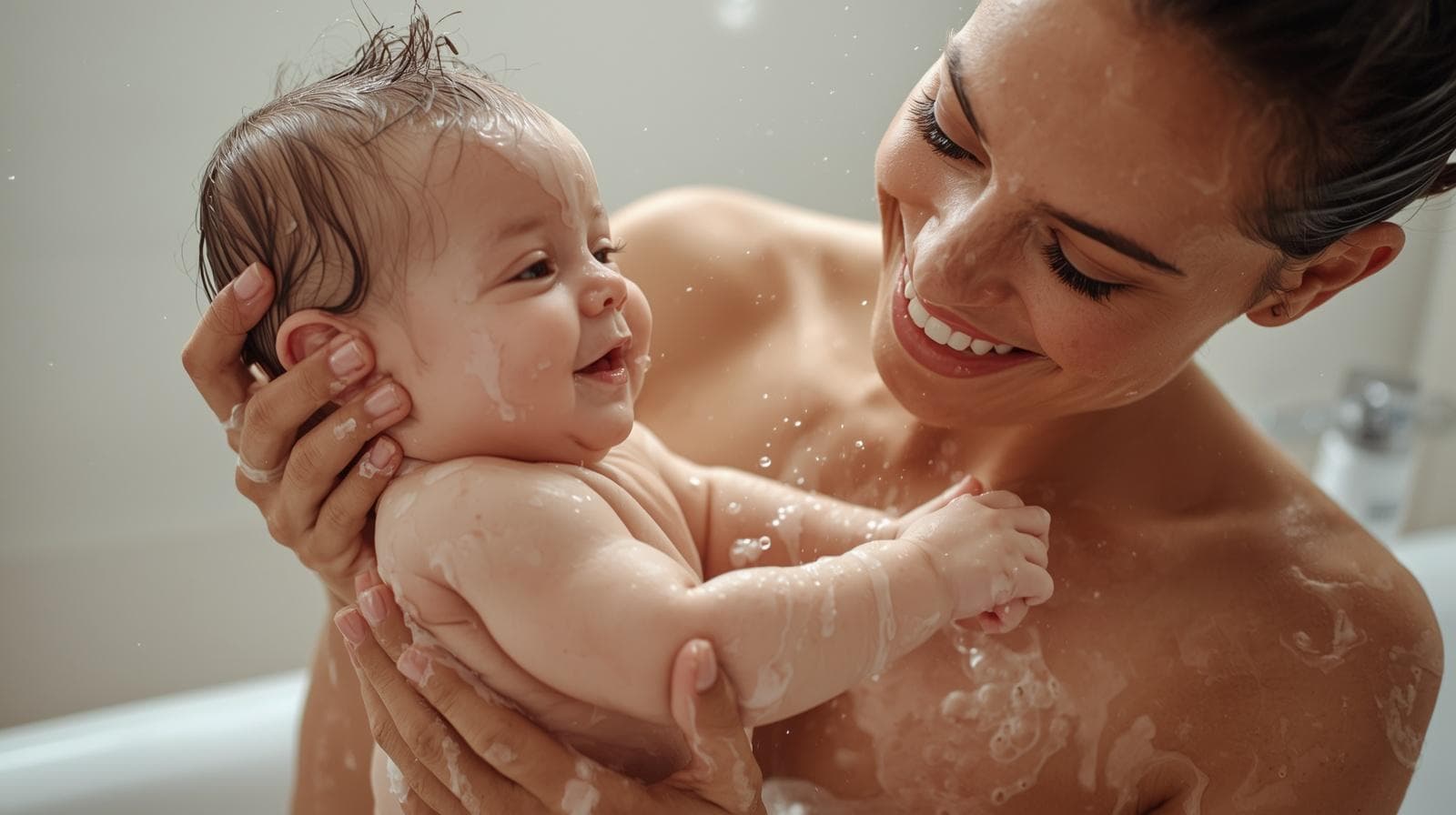
Bath time can be one of the most meaningful moments in a baby’s day. Warm water, gentle touch and a parent’s reassuring voice can turn everyday cleansing into a moment of bonding. But when a baby cries because of eye stinging, dry skin or an uncomfortable cleanser, bath time may quickly become stressful.
A tear-free syndet baby wash can help make the routine gentler and simpler. Little Q 3T is designed as a head-to-toe syndet cleanser for delicate newborn and sensitive skin. The product information lists mild cleansing agents including SCI-85, Decyl Glucoside and Sodium Cocoyl Glycinate, along with Ceramide NP, Niacinamide, D-Panthenol, Hyaluronic Acid, Oat, Calendula, Aloe Vera and Licorice.
This guide explains what “tear-free” and “syndet” mean, how the formula relates to the baby skin barrier and why Little Q 3T may be a practical choice for a calm, uncomplicated bath routine.
Important note: A baby cleanser is a cosmetic product, not a treatment for eczema, infection or severe irritation. Consult a paediatrician or dermatologist if your baby has persistent, painful, spreading or worsening skin symptoms.
What Is a Tear-Free Syndet Wash?
The phrase tear-free syndet baby wash describes two important product features.
“Tear-free baby wash” generally means that the formula is designed to reduce stinging if it accidentally comes near the eyes. It does not mean that parents should deliberately put cleanser into the eyes. Careful application and thorough rinsing are still important.
“Syndet” is short for synthetic detergent. A syndet cleanser uses selected surfactants rather than traditional alkaline soap. These surfactants help water mix with oil and dirt, allowing sweat, residue and impurities to be rinsed away.
A baby syndet wash can be formulated at a neutral or mildly acidic pH, which may be closer to the skin’s natural surface environment than traditional soap. The Indian Academy of Pediatrics recommends mild syndet-type cleansing rather than ordinary soap for babies because alkaline soap can affect the epidermal barrier.
What Does “Tear-Free” Really Mean?
Tear-free formulas are intended to make accidental contact around the eyes more comfortable. This can be helpful because babies may move suddenly during bathing, and water or cleanser can splash easily.
However, tear-free should not be interpreted as:
Safe to place directly into the eyes.
Suitable for treating eye irritation.
A guarantee that no baby can react to the product.
Permission to leave cleanser on the face.
A substitute for careful supervision.
If the cleanser enters the eyes, rinse gently with clean water. Seek medical advice if significant redness, swelling or ongoing discomfort develops.
Why Bath Time Can Affect Baby Comfort
Bathing affects more than cleanliness. Water temperature, duration, friction and the cleansing formula can influence how the skin feels afterwards.
Infant skin is still developing. Its protective barrier helps retain moisture and protect against external irritants, but it may be more easily affected by heat, friction, dry air, saliva, sweat, urine and unsuitable skincare products.
A cleanser that is too strong may remove more surface oil than necessary. This can leave the skin feeling:
Tight after bathing.
Rough or flaky.
Dry around the cheeks and legs.
More sensitive to clothing.
Uncomfortable in folds.
Prone to redness after repeated washing.
The European roundtable recommendations on infant cleansing state that alkaline soaps can affect skin pH and lipid content and may contribute to dryness and irritation. They recommend a mild liquid cleanser that does not alter normal skin pH or irritate the skin and eyes.
This is why the quality of a baby cleanser matters. The goal is not simply to create foam. It is to clean while supporting comfort.
How Little Q 3T Supports Gentle Cleansing
A Head-to-Toe Format
Little Q 3T is presented as a head-to-toe baby wash for cleansing the scalp, hair and body according to the product directions.
A one-product format can make bath time easier for parents who would otherwise need separate shampoo and body wash bottles. This may be especially useful when:
One hand must support the baby’s head and neck.
The baby becomes restless during bathing.
Parents are travelling.
Bathroom storage is limited.
The family prefers a minimalist skincare routine.
Fewer products may also make it easier to identify a possible cause if irritation occurs.
Mild Syndet Cleansing
The product lists SCI-85, Decyl Glucoside and Sodium Cocoyl Glycinate as cleansing agents.
These ingredients help lift sweat, dirt, excess oil and everyday residue from the skin and hair. They are used as part of a syndet cleansing system rather than a conventional alkaline soap base.
A mild cleanser does not need to create a large amount of foam. Foam is mainly a sensory feature and is not a reliable measure of how effectively a product cleans.
pH-Balanced Positioning
Little Q 3T is described as a pH-balanced baby wash. A pH-conscious formula is designed to work closer to the mildly acidic surface environment of healthy skin.
The skin’s acid mantle supports normal barrier function and contributes to a healthy surface environment. Cleansers can temporarily influence skin pH depending on their formulation, contact time and frequency of use.
pH balance is helpful, but it is not the only factor parents should consider. The cleansing agents, fragrance, preservatives, botanical extracts and the baby’s individual tolerance are also important.
Understanding the Little Q 3T Formula
SCI-85
SCI-85 is a form of Sodium Cocoyl Isethionate. It is a mild surfactant used in syndet bars and liquid cleansers.
Its role is to help lift oil and dirt from the skin while contributing to a soft lather. It does not work in the same way as traditional alkaline soap.
For baby skin, the important question is not whether the product produces abundant foam. It is whether the cleanser removes everyday impurities without leaving the skin excessively tight or dry.
Decyl Glucoside
Decyl Glucoside is a non-ionic surfactant commonly found in mild cleansing products. It helps remove impurities from the skin and hair.
Parents looking for a gentle baby cleanser may recognise this ingredient in products designed for delicate skin. However, “mild” does not mean that an ingredient is guaranteed to suit every child. Individual sensitivity is always possible.
Sodium Cocoyl Glycinate
Sodium Cocoyl Glycinate is an amino-acid-based surfactant. It supports gentle cleansing and contributes to the formula’s overall rinse and skin-feel properties.
Little Q 3T combines it with other mild surfactants. This can help balance cleansing performance rather than relying on one stronger cleansing ingredient.
Ceramide NP
Ceramide NP is a skin-conditioning lipid associated with the outer skin barrier. Ceramides help support the lipid structure that reduces moisture loss.
Little Q 3T includes Ceramide NP as part of its formula. This may appeal to parents who want a cleanser that supports baby skin barrier care.
Because the product is rinsed off, Ceramide NP should not be considered a replacement for a leave-on moisturiser. It is one supportive component within a complete cleansing formula.
D-Panthenol
D-Panthenol, also called provitamin B5, is commonly used for its moisturising and conditioning properties.
It can contribute to a softer, more comfortable after-bath skin feel. It does not treat eczema, infection or allergy, but it complements the product’s gentle-care positioning.
Hyaluronic Acid and Glycerine
Hyaluronic Acid and Glycerine are humectants. They attract and hold water, helping support a moisturised skin feel.
Their impact is naturally more limited in a rinse-off cleanser than in a leave-on cream. However, they contribute to the hydration-focused design of Little Q 3T.
Niacinamide
Niacinamide is a form of vitamin B3. It is commonly used in skincare for conditioning and supporting the appearance of a healthy skin barrier.
Little Q 3T lists Niacinamide among its ingredients. Parents should still observe the baby’s skin carefully when introducing a new product.
Oat, Calendula, Aloe Vera and Licorice
These botanical ingredients form part of the formula’s skin-comfort blend. Oat is often used in products for dry skin, while Aloe Vera, Calendula and Licorice are commonly found in cosmetic formulations for conditioning.
Natural ingredients are not automatically allergy-free. If a baby has known sensitivity to botanical extracts, parents should consult a healthcare professional before introducing a product containing them.
Why Parents May Choose Little Q 3T
1. It Simplifies the Bath Routine
Many parents prefer products that perform more than one role. Little Q 3T is designed for head-to-toe cleansing, reducing the need to switch between multiple bottles.
This can make the routine more efficient without requiring parents to compromise on gentle handling.
2. It Supports Sensitive-Skin Care
A baby wash for sensitive skin should cleanse without unnecessary stripping. Little Q 3T’s syndet base, pH-balanced positioning and conditioning ingredients support this type of routine.
It may be relevant for babies who experience mild dryness, tightness after soap or sensitivity to stronger cleansers.
3. It Helps Make Bath Time More Comfortable
A tear-free syndet baby wash can help reduce discomfort from accidental splashes around the eyes. A comfortable experience may also help babies become more relaxed during future baths.
The formula is only one part of comfort. Parents should also use warm water, keep baths brief and maintain a secure hold.
4. It Fits a Minimalist Approach
A baby does not necessarily need a large collection of skincare products. A mild cleanser, soft towel and suitable moisturiser when needed may be enough for many families.
Using fewer products can also reduce the number of ingredients that come into contact with the baby’s skin.
5. It May Support the After-Bath Skin Feel
The combination of mild surfactants, Ceramide NP, panthenol, humectants and botanical ingredients is designed to leave the skin feeling clean and comfortable.
The result may differ from baby to baby. If dryness persists, parents should review the entire routine rather than relying only on a cleanser.
Creating a Happier Bath Time
A product can support bath time, but the surrounding routine matters just as much.
Prepare Before Undressing the Baby
Keep the cleanser, towel, clean clothes, diaper and moisturiser within reach before the bath begins. Preparation reduces distractions and helps parents maintain constant supervision.
Use Comfortable Water
Water should feel comfortably warm, not hot. Raising Children Network recommends checking that the water is around 37–38°C before placing a newborn in the bath.
Keep the Bath Brief
A newborn bath does not need to be long. Guidance from Raising Children Network suggests that approximately 5–10 minutes is enough for many newborn baths.
Longer exposure to water, particularly hot water, may contribute to dryness.
Use Gentle Touch
Avoid rough sponges, brushes and vigorous rubbing. Clean softly, paying attention to folds around the neck, underarms, groin and behind the ears.
Pat Dry
After bathing, gently pat the baby dry rather than rubbing. Dry the folds carefully, as trapped moisture can contribute to discomfort.
Moisturise if Needed
If the skin appears dry, a fragrance-free cream or ointment may be appropriate. Persistent dryness should be discussed with a healthcare professional.
How to Choose a Baby Cleanser
Parents comparing products should consider more than claims on the front of the bottle.
Look for a Mild Cleansing Base
A syndet or soap-free cleanser may be preferable to strongly alkaline traditional soap for delicate skin. The full surfactant system matters more than the amount of foam.
Check the pH
A neutral or mildly acidic formula may be more compatible with the baby’s natural skin environment. The Indian Academy of Pediatrics recommends a mild, neutral or acidic cleanser that does not disturb the acid mantle.
Review Fragrance Information
Fragrance may irritate some babies, especially those with reactive or eczema-prone skin. The Royal Children’s Hospital recommends choosing products free from fragrance, botanicals and antibacterial agents where possible.
Read the Complete Ingredient List
Check:
Cleansing agents.
Fragrance.
Preservatives.
Botanical extracts.
Colourants.
Humectants.
Barrier-support ingredients.
Age suitability.
Check Packaging Details
Look for the manufacturer’s name, batch number, expiry date, age guidance, usage instructions and safety warnings.
Frequently Asked Questions
What is a tear-free syndet baby wash?
It is a soap-free cleanser made with synthetic detergent ingredients and designed to reduce stinging around the eyes. It is intended for gentle cleansing, not direct use inside the eyes.
Is Little Q 3T suitable for newborns?
Little Q 3T is marketed for delicate newborn and sensitive skin. Parents should check the latest packaging and age guidance. If the baby was premature or has a diagnosed skin condition, consult a healthcare professional before introducing a new cleanser.
Is Little Q 3T a soap-free baby wash?
Yes. It is presented as a syndet-based, soap-free cleanser.
Can I use Little Q 3T on my baby’s hair?
The product is marketed as a head-to-toe cleanser. Use it on the scalp and hair according to the label directions, avoid deliberate eye contact and rinse carefully.
Is a tear-free wash completely irritation-proof?
No. Tear-free refers mainly to reduced eye-stinging. Any product may cause irritation or allergy in an individual baby.
Is Little Q 3T suitable for eczema-prone skin?
It may be used as part of a gentle cleansing routine, but it is not a treatment for eczema. Babies with ongoing itching, redness, cracking or rash should be assessed by a paediatrician or dermatologist.
How often should a newborn have a full bath?
Many newborns do not need a full bath every day. Raising Children Network states that bathing two to three times a week is generally enough for many newborns, although individual needs may differ.
What should I do if irritation develops?
Stop using the product and rinse the skin with clean water. Seek medical advice if the irritation persists, spreads or becomes painful. Obtain urgent help for facial swelling, breathing difficulty or widespread hives.
Final Thoughts: Make Bath Time a Happy Time
A tear-free syndet baby wash can support a more comfortable and convenient bath-time routine. Little Q 3T combines mild syndet cleansing with a head-to-toe format, pH-balanced positioning and ingredients such as Ceramide NP, D-Panthenol, Hyaluronic Acid, Niacinamide, Oat, Calendula, Aloe Vera and Licorice.
Its tear-free positioning may help reduce discomfort from accidental eye splashes, while the soap-free cleansing system is designed for delicate newborn and sensitive skin.
The best bath routine is not only about choosing a product. It also includes warm water, brief bathing, gentle handling, careful drying and professional advice when skin problems persist.
Choose Little Q 3T baby wash for gentle, head-to-toe cleansing designed to support soft skin and calmer bath-time moments. Give your baby comfort, care and happy smiles with every bath.
Disclaimer: The information in this blog is here to help and inform, but it is not a replacement for advice from a doctor or nutritionist. We try to share correct and useful information, but we always suggest talking to your child’s pediatrician or nutritionist for specific advice about their health and nutrition. These professionals know what’s best for your child’s unique needs.