
Switch to pH-Balanced LittleQ 3T Baby Wash Benefits
Learn why switching to pH-balanced baby wash like LittleQ 3T may support softer, healthier-looking skin with gentle, soap-free cleansing.Little Q
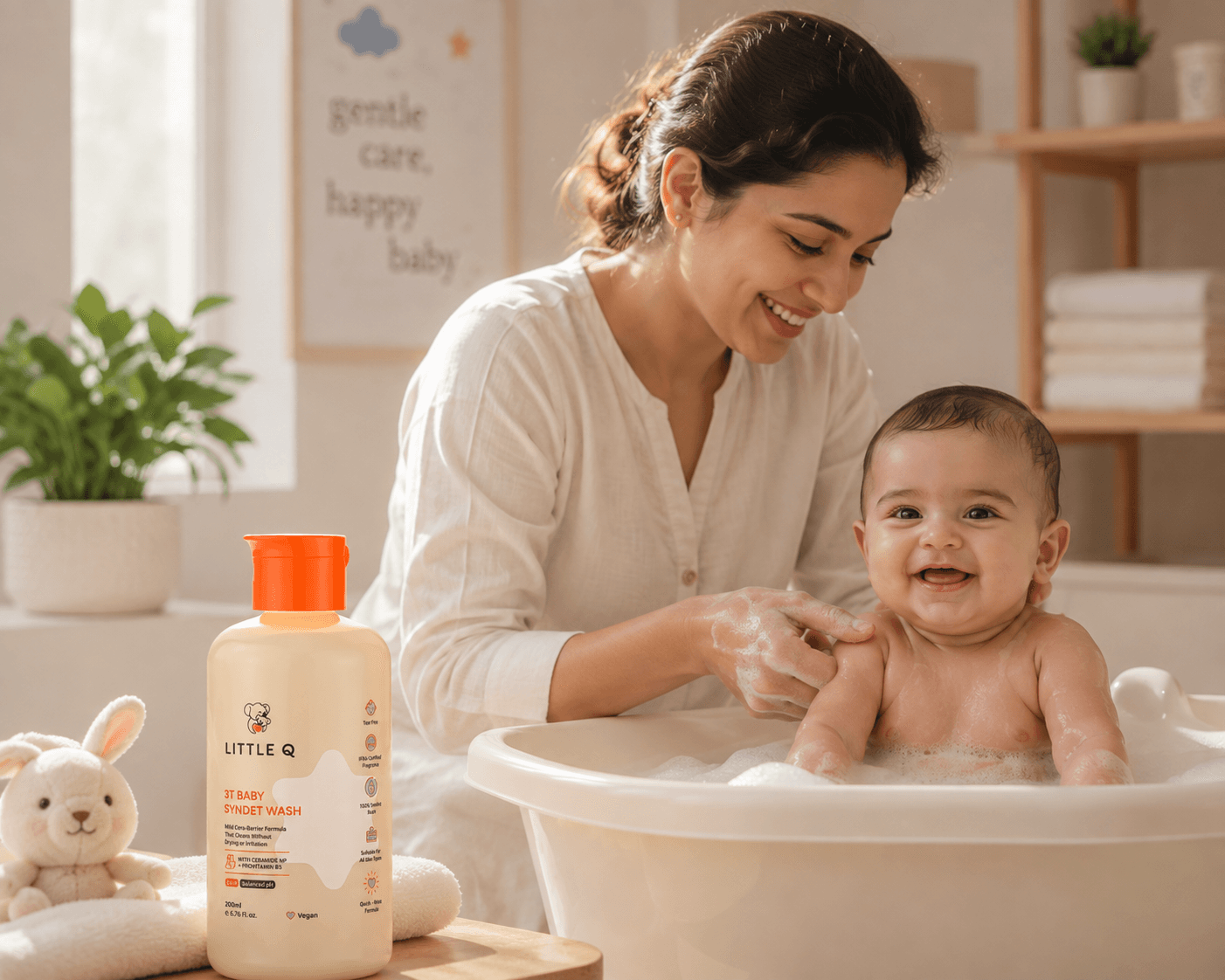
Switch to pH-Balanced LittleQ 3T: Soap-Free Baby Wash Benefits
A baby’s skin is delicate, sensitive and still developing. That is why many parents are moving away from conventional soaps and choosing a pH-balanced baby wash for everyday cleansing.
Traditional soaps can be alkaline and may remove some of the skin’s natural oils. In contrast, a soap-free syndet cleanser is designed to clean gently while being closer to the skin’s natural acidic environment.
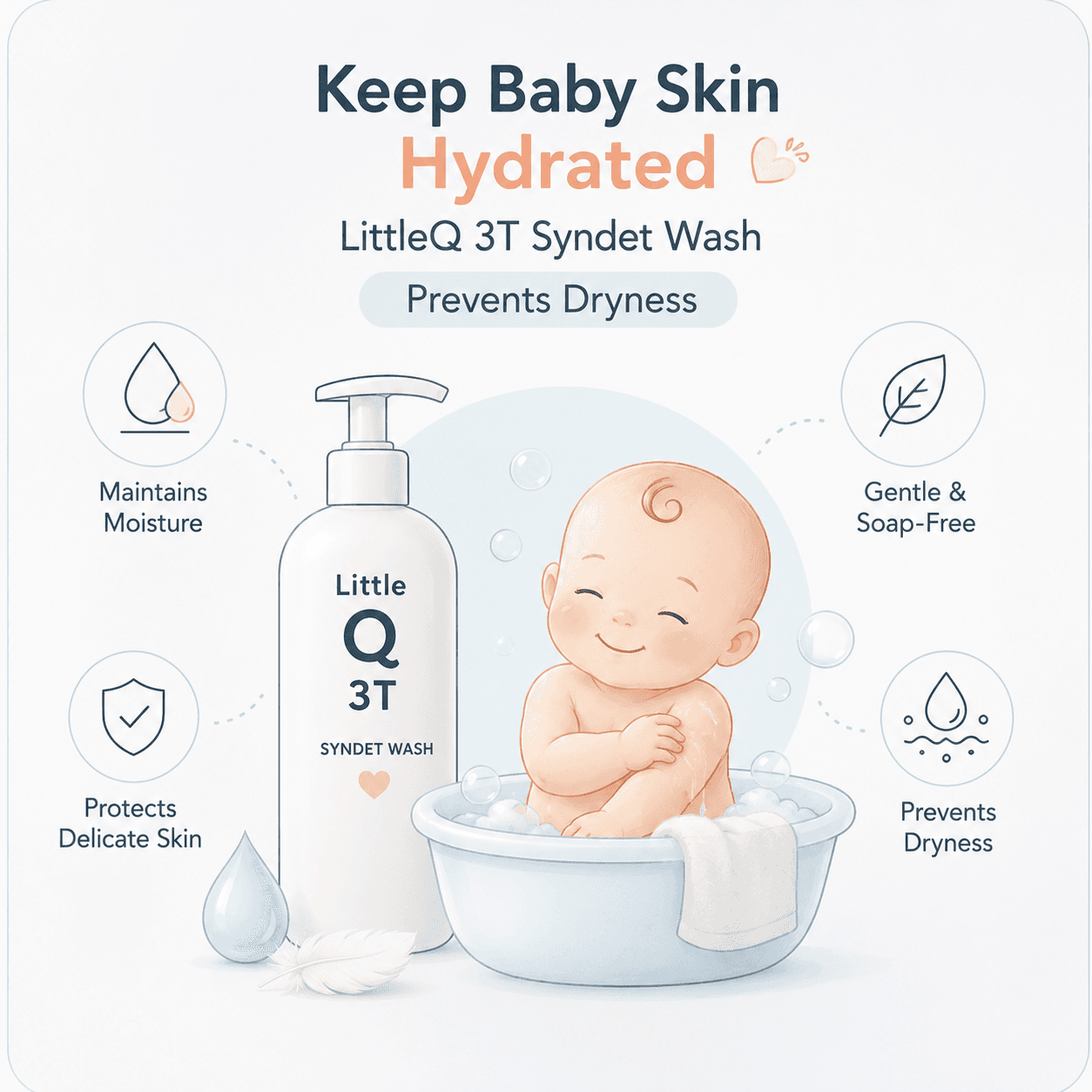
LittleQ 3T is a pH-balanced, soap-free syndet cleanser created for gentle head-to-toe baby care. Its listed ingredients include mild cleansing agents such as SCI-85, Decyl Glucoside and Sodium Cocoyl Glycinate, along with Ceramide NP, Niacinamide, D-Panthenol, Hyaluronic Acid, Oat, Calendula, Aloe Vera and Licorice.
This article explains the benefits of switching to LittleQ 3T, how pH balance relates to infant skin and what parents should consider when choosing a baby cleanser.
What Does pH-Balanced Mean?
The pH scale measures how acidic or alkaline a substance is. A lower pH is more acidic, while a higher pH is more alkaline.
The surface of healthy skin has a naturally acidic environment often called the acid mantle. This protective layer helps support the skin barrier and contributes to the skin’s defence against external irritants.
A pH-balanced baby wash is formulated to be compatible with the skin’s natural environment. Little Q describes its product as pH-balanced and designed for everyday head-to-toe cleansing.
pH balance does not mean that a product will suit every baby. The complete formula also matters, including the surfactants, fragrance, preservatives and botanical ingredients.
Why Baby Skin Needs Gentle Cleansing
Infant skin is thinner and more fragile than adult skin, baby skin is still developing during the first months and is more sensitive to bacteria, irritants and allergens.
This is why a good cleanser should remove sweat, dirt and residue without creating unnecessary dryness. A baby does not need aggressive scrubbing or a strong “squeaky-clean” feeling.
A suitable baby wash for sensitive skin should ideally:
Clean effectively with mild surfactants.
Avoid excessive stripping of natural oils.
Rinse away easily.
Be appropriate for the baby’s age.
Provide clear ingredient information.
Avoid unnecessary irritants.
Support a simple skincare routine.
Over-cleansing can be as problematic as using the wrong product. Bathing frequency, water temperature, friction and the use of other products can all affect the skin.
Baby Soap vs Baby Wash
When considering baby soap vs baby wash, the key difference is usually the cleansing system and ph.
Traditional soap is made through a reaction between oils or fats and an alkali. It is typically alkaline. Medical News Today explains that conventional soaps may have a pH around 10 and can disrupt the acidic environment of the skin, remove surface lipids and contribute to irritation or dryness.
A soap-free baby wash, particularly one based on mild syndet surfactants, can be formulated closer to the skin’s natural ph. This may make it a more suitable option for babies with dry or sensitive skin.
Traditional Soap
Traditional soap may:
Have a relatively alkaline ph.
Remove some natural skin oils.
Leave sensitive skin feeling tight.
Increase dryness when used too often.
Be less suitable for babies prone to eczema or irritation.
Soap-Free Syndet Cleanser
A syndet wash for babies may:
Use mild synthetic cleansing agents.
Be formulated at a neutral or mildly acidic ph.
Clean without requiring vigorous rubbing.
Support a more comfortable after-bath feel.
Work well as part of a minimal skincare routine.
This does not mean every soap is harsh or every baby wash is gentle. Parents should review the complete formulation rather than relying only on the product category.
Benefits of Switching to Little Q 3T
1. Supports a Skin-Friendly pH
One of the main reasons parents choose a pH-balanced baby wash is to help avoid unnecessary disruption to the skin’s natural environment.
Little Q 3T is marketed as pH-balanced for baby skin. A compatible pH can be especially relevant when the skin is dry, reactive or frequently exposed to cleansing products.
The benefit is not that pH alone moisturises the skin. Instead, it is part of a broader formula designed to provide mild cleansing without excessive alkalinity.
2. Provides Soap-Free Cleansing
Little Q 3T is described as a soap-free baby wash. It uses cleansing agents such as SCI-85, Decyl Glucoside and Sodium Cocoyl Glycinate.
These surfactants help loosen sweat, dirt and residue from the skin so they can be rinsed away. A mild cleansing system can reduce the need for scrubbing, which is important because friction can irritate delicate skin.
3. Helps Simplify Baby Care
Little Q 3T is presented as a head-to-toe cleanser. This means parents may use one product for the scalp, hair and body instead of switching between several products.
A simpler routine can be helpful for newborns and babies with reactive skin. When fewer products are used, parents can also identify potential irritants more easily if a reaction occurs.
4. Supports the Baby Skin Barrier
The formula lists Ceramide NP, D-Panthenol, Hyaluronic Acid, Glycerine, Niacinamide and Aloe Vera among its skin-conditioning or hydrating ingredients.
The baby skin barrier helps reduce moisture loss and protects the skin from external irritants. A cleanser cannot replace a leave-on moisturiser, but a well-formulated wash can be part of a barrier-conscious routine.
Ceramides are lipids naturally found in the outer skin layer. Panthenol and glycerine are commonly used to support a moisturised skin feel, while Hyaluronic Acid is a humectant that helps attract water.
5. Offers Gentle Head-to-Toe Cleansing
The product is marketed as a tear-free baby wash for head-to-toe cleansing. Tear-free products are designed to be gentle around the eyes, although parents should still avoid deliberately getting cleanser into the eyes.
Using one product for multiple areas may make bath time more convenient, especially when parents need to support a baby securely and manage the bath with care.
6. May Help Reduce the Dry, Tight Feeling
A cleanser that combines mild surfactants with conditioning ingredients may leave the skin feeling more comfortable after rinsing.
Little Q describes its formula as designed to cleanse without drying and as suitable for everyday use. However, individual results vary. If a baby develops persistent dryness, scaling or irritation, a healthcare professional should be consulted.
What Makes the Ingredients Gentle?
Mild Cleansing Agents
SCI-85, Decyl Glucoside and Sodium Cocoyl Glycinate are the main cleansing ingredients highlighted by the brand.
SCI-85 can help produce a soft lather. Decyl Glucoside is a mild non-ionic surfactant, while Sodium Cocoyl Glycinate is an amino-acid-based cleanser. Together, they help remove impurities without relying on traditional alkaline soap.
Ceramide NP
Ceramide NP supports the concept of barrier-conscious cleansing. Ceramides help form part of the skin’s protective lipid structure.
Because Little Q 3T is rinse-off, the role of Ceramide NP should be understood as supportive rather than equivalent to a leave-on barrier cream.
D-Panthenol
D-Panthenol, also known as provitamin B5, is commonly used for its conditioning properties. It helps contribute to a smooth, soft skin feel.
This ingredient is often valued in products designed for dry or delicate skin, although the complete formula determines the final experience.
Hyaluronic Acid and Glycerine
Hyaluronic Acid and Glycerine are hydration-supporting humectants. They help attract water and support a moisturised feel.
In a cleanser, their effect is limited by the product’s short contact time. Parents should still consider a suitable moisturiser if the baby’s skin appears dry.
Oat, Calendula, Aloe Vera and Licorice
These botanical ingredients are included in Little Q 3T’s skin-comfort blend. Oat is commonly used for dry-skin care, while Aloe Vera, Calendula and Licorice are frequently found in soothing cosmetic formulations.
Natural ingredients are not automatically allergy-free. Parents should be cautious if their baby has a known allergy to botanical ingredients or a history of cosmetic reactions.
Who May Benefit from Switching?
A gentle baby cleanser may be useful for babies who experience:
Dryness after bathing.
Tight or rough skin.
Mild sensitivity to conventional soaps.
Redness after exposure to fragranced products.
Frequent cleansing because of sweat or food residue.
A family history of sensitive or eczema-prone skin.
A product change should not be used to self-treat a medical condition. Seek professional advice if the baby has severe redness, broken skin, oozing, blisters, swelling, fever or a rash that does not improve.
Common Mistakes Parents Should Avoid
Over-Bathing
Newborns generally do not need a full bath every day. Mayo Clinic notes that bathing around three times a week may be enough for many newborns, while the face, neck and diaper area can be cleaned as needed.
Using Hot Water
Hot water can worsen dryness and discomfort. Warm water is more suitable for delicate baby skin.
Scrubbing the Skin
A baby’s skin should be cleaned gently. Rough sponges, brushes and vigorous rubbing can cause friction and irritation.
Using Multiple Fragranced Products
Using shampoo, bubble bath, body wash, lotion and powder together can increase exposure to potential irritants. A simple routine is often easier to manage.
Assuming “Natural” Means Risk-Free
Botanical extracts and essential oils can still cause reactions. Always read the ingredient list and observe the baby’s skin.
Frequently Asked Questions
Why choose a pH-balanced baby wash?
A pH-balanced cleanser is formulated to be compatible with the skin’s natural acidic environment. This may help reduce unnecessary disruption compared with strongly alkaline soap.
Is Little Q 3T suitable for sensitive skin?
Little Q 3T is marketed as a baby wash for sensitive skin and is described as pH-balanced, soap-free and gentle. Babies with diagnosed skin conditions should receive personalised medical advice.
Is a syndet wash better than soap?
A mild syndet cleanser may be more suitable than traditional alkaline soap for babies with dry or sensitive skin. The choice depends on the complete formula and the individual baby.
Does pH-balanced mean allergy-proof?
No. pH balance does not prevent every allergy or reaction. Ingredients, preservatives, fragrance and individual sensitivity all matter.
Can this wash treat eczema?
No. It can support a gentle cleansing routine but should not be considered a treatment for eczema, infection or severe rash.
What is the difference between soap-free and sulfate-free?
Soap-free means the formula does not use traditional soap. Sulfate-free means it excludes certain sulfate surfactants. These terms describe different aspects of a product.
How should parents respond to irritation?
Stop using the product and rinse the skin with clean water. Consult a paediatrician if the reaction persists, spreads or becomes painful. Seek urgent care for breathing difficulty, facial swelling or widespread hives.
Final Thought:
Switching from conventional soap to a pH-balanced baby wash may help parents create a gentler cleansing routine for delicate infant skin. Little Q 3T combines soap-free syndet cleansing with mild surfactants, hydration-supporting ingredients and barrier-conscious components such as Ceramide NP, D-Panthenol, Hyaluronic Acid and Glycerine.
Its head-to-toe format can also simplify newborn skincare, while the pH-balanced approach may be more suitable for babies who experience dryness or sensitivity after using traditional soap.
The most important choice is not simply between “soap” and “wash.” Parents should look for a complete, transparent formula, avoid unnecessary irritants and seek professional advice when skin problems continue.
Make the Switch to Gentle Care
Give your baby’s delicate skin a softer cleansing experience with Little Q 3T baby wash. Choose soap-free baby wash care designed to support comfortable, happy and worry-free bath-time moments.
Disclaimer: The information in this blog is here to help and inform, but it is not a replacement for advice from a doctor or nutritionist. We try to share correct and useful information, but we always suggest talking to your child’s pediatrician or nutritionist for specific advice about their health and nutrition. These professionals know what’s best for your child’s unique needs.