
pH-Balanced Baby Wash: LittleQ 3T for Soft Skin
Discover how pH-balanced baby wash Little Q 3T supports gentle cleansing, moisture and naturally soft-looking skin for babies with delicate skin.Little Q
pH-Balanced Baby Wash: How Little Q 3T Supports Naturally Soft Skin
Baby skin is delicate, sensitive and still developing. The cleanser used during bath time can influence how the skin feels after washing, especially when the baby is prone to dryness or irritation.
A pH-balanced baby wash is designed to work closer to the natural environment of the skin than strongly alkaline soap. This may help reduce unnecessary disruption to the skin’s surface balance while providing effective cleansing.
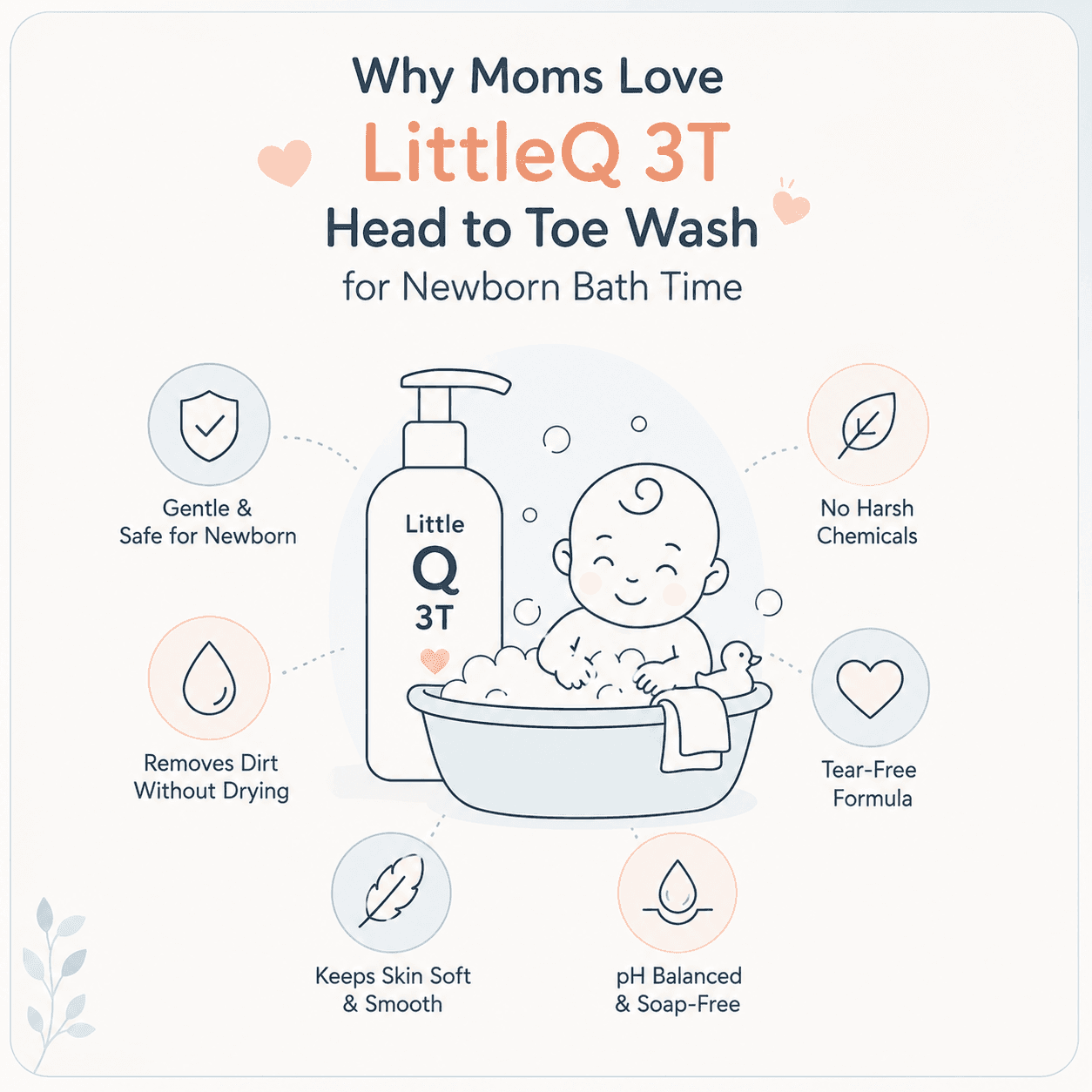
Little Q 3T is a head-to-toe syndet cleanser designed for delicate newborn and sensitive skin. Its listed cleansing agents include SCI-85, Decyl Glucoside and Sodium Cocoyl Glycinate. The formula also contains Ceramide NP, Niacinamide, D-Panthenol, Hyaluronic Acid, Oat, Calendula, Aloe Vera and Licorice.
This guide explains the relationship between pH and baby skin, how syndet cleansers work and why Little Q 3T may be a practical option for parents who want soft, comfortable-looking skin after bath time.
Important: Little Q 3T is a cosmetic cleanser, not a treatment for eczema, infection or severe rash. Speak with a paediatrician or dermatologist if your baby has persistent, painful or worsening symptoms.
What Does pH-Balanced Mean?
pH is a scale used to describe how acidic or alkaline a substance is. The scale generally ranges from 0 to 14.
The surface of healthy skin is mildly acidic. This natural surface environment is sometimes called the acid mantle. It is influenced by sweat, natural oils and other components of the skin.
A pH-balanced baby wash is formulated to be compatible with the skin’s natural surface environment. It is usually neutral or mildly acidic rather than strongly alkaline.
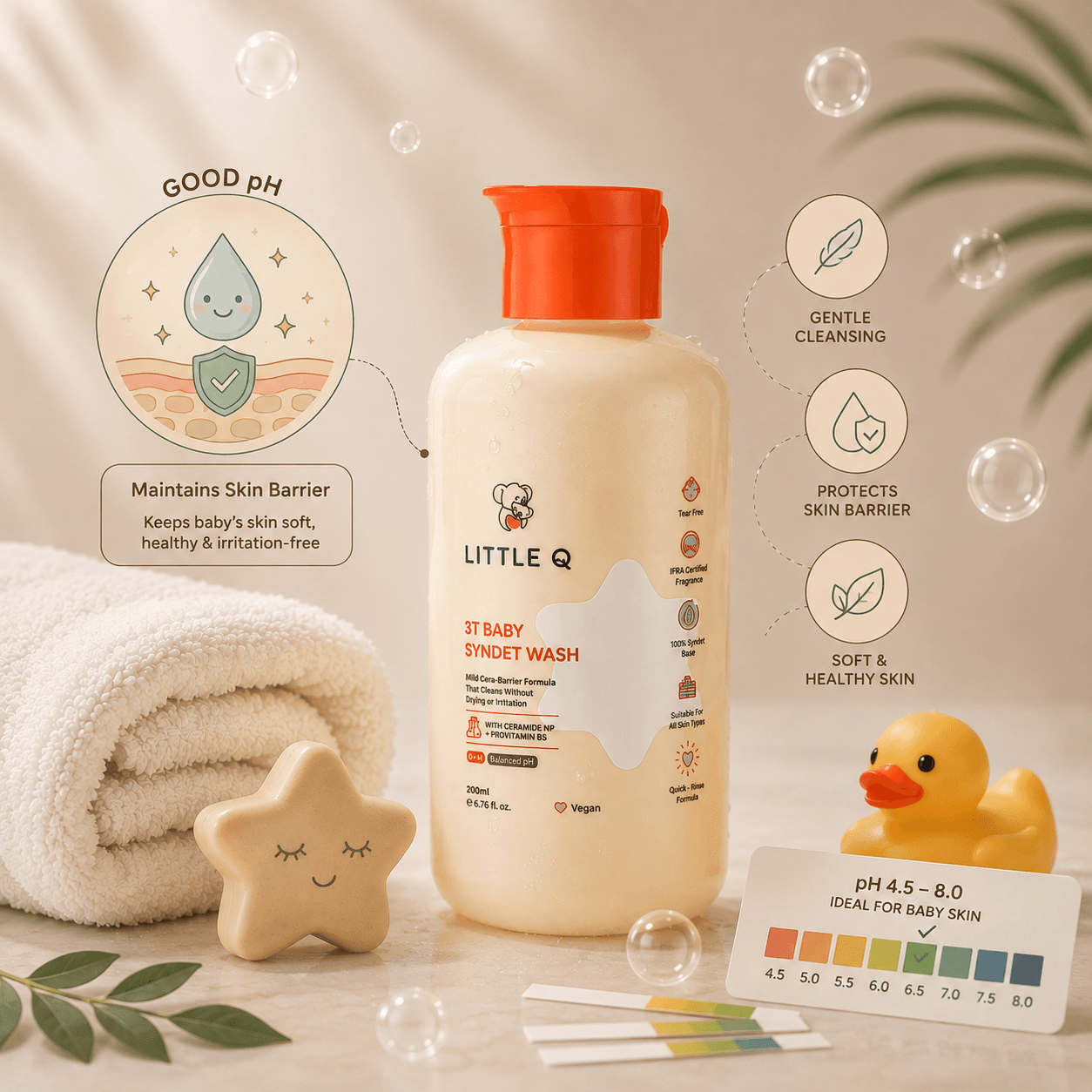
Little Q 3T is described by the brand as pH-balanced and suitable for everyday head-to-toe cleansing.
pH balance is an important consideration, but it is not the only measure of a good baby cleanser. The complete formula, cleansing agents, fragrance, preservatives and the baby’s individual skin response are also important.
Why Baby Skin pH Matters
A baby’s skin is still maturing. Its outer layer helps limit moisture loss and protects against external irritants, but this barrier can be affected by frequent washing, hot water, friction, dry weather and unsuitable products.
The Indian Academy of Pediatrics recommends acidic or neutral liquid cleansers for infants because they are less likely to disturb the skin barrier and acid mantle.
A cleanser that significantly changes the skin’s surface pH may affect the normal functions of the outer skin layer. This does not mean that every pH change causes harm or that every soap is unsuitable for every child. It means that a mild, pH-conscious formula may be a sensible option for delicate skin.
The Role of the Acid Mantle
The acid mantle supports the skin’s normal surface functions. It helps maintain the activity of enzymes involved in barrier formation and supports a healthy relationship between the skin and its natural microorganisms.
Acidic syndet with ordinary soap found that the syndet kept infant skin pH within the physiological range for longer after washing.
This is one reason paediatric skincare recommendations often favour neutral or mildly acidic syndet cleansers over alkaline soap.
How Cleansing Affects the Baby Skin Barrier
The skin barrier is the outer protective layer of the skin. It helps retain moisture and protects against external irritants.
When the barrier is disturbed, a baby may develop:
Dry or flaky patches.
Rough texture.
Tightness after washing.
Redness.
Increased sensitivity.
Itching or discomfort.
Cleansing is necessary to remove dirt, sweat, food residue and diaper-related impurities. However, overly strong cleansing may remove too many natural oils from the skin.
A mild cleanser should provide enough cleaning to keep the baby comfortable without creating a stripped or excessively dry feeling.
Why Traditional Soap Can Feel Drying
Traditional soap is commonly alkaline. Reviews of skincare science report that ordinary soap often has a pH of approximately 8.5–11, while syndet cleansers are commonly adjusted closer to pH 5.5–7.
Alkaline cleansing can temporarily raise the skin’s surface pH and may affect the lipid structures that support the barrier. Repeated use may be more noticeable in babies with dry or sensitive skin.
The effect depends on the soap formulation, water temperature, bathing frequency, contact time and the baby’s individual skin.
What Is a Syndet Wash?
“Syndet” is short for synthetic detergent. A baby syndet wash uses synthetic surfactants rather than traditional soap to clean the skin.
The word synthetic does not mean harsh. In skincare, it describes the type of cleansing molecules used. These molecules help water mix with oil and dirt, allowing the impurities to be rinsed away.
Syndet products can be adjusted to a neutral or mildly acidic pH. They may also contain moisturising or skin-conditioning ingredients.
Benefits of pH-Balanced Cleansing
1. Helps Support the Natural Skin Environment
A pH-balanced baby wash is designed to avoid the strongly alkaline profile of traditional soap.
This may help reduce unnecessary disruption to the acid mantle and support a comfortable cleansing experience.
2. May Reduce the Dry, Tight Feeling
A mild syndet formula can be less stripping than some traditional soaps. This may be helpful for babies whose skin feels tight or rough after bathing.
The formula, bathing habits and skin type all contribute to the final result.
3. Supports the Baby Skin Barrier
Little Q 3T contains Ceramide NP and conditioning ingredients that support its baby skin barrier positioning.
A cleanser cannot repair severe barrier damage on its own. However, choosing a mild cleanser may reduce one potential source of irritation.
4. Offers Head-to-Toe Convenience
Little Q 3T is designed for head-to-toe use, allowing parents to care for the scalp, hair and body with one cleanser.
Using fewer products may simplify the routine and reduce the total number of ingredients exposed to the baby’s skin.
5. Supports Soft-Looking Skin
The combination of mild surfactants and moisturising ingredients is designed to leave the skin feeling clean, soft and comfortable.
The product cannot guarantee naturally soft skin for every baby. If the baby has persistent dryness or irritation, professional advice may be needed.
6. May Suit Sensitive-Skin Routines
A baby wash for sensitive skin should ideally use mild surfactants, avoid excessive fragrance and have clear labelling.
Little Q 3T is marketed for delicate newborn and sensitive skin and is described as paraben-free, sulfate-free and pH-balanced.
Look for Clear Safety Information
Reliable baby-care packaging should provide:
Full ingredient information.
Manufacturer details.
Batch number.
Expiry date or period-after-opening guidance.
Recommended age range.
Usage instructions.
Customer-care contact details.
Relevant warnings.
The product should not rely only on broad claims such as “natural,” “chemical-free” or “clinically inspired.”
Frequently Asked Questions
What is the main benefit of Little Q 3T?
Little Q 3T combines mild syndet cleansing with a pH-balanced, head-to-toe formula. Its listed ingredients are intended to support gentle cleansing, hydration and skin comfort.
Is Little Q 3T suitable for newborn skin?
The product is marketed for delicate newborn and sensitive skin. Parents should check the latest packaging and age guidance. If the baby was premature or has a diagnosed skin condition, consult a healthcare professional before introducing a new cleanser.
Is LittleQ 3T fragrance-free?
Parents should check the current product packaging and ingredient list for the latest fragrance information. Fragrance can be irritating for some babies, so families with sensitive or eczema-prone skin should review this carefully.
Does pH-balanced mean allergy-free?
No. pH balance means the cleanser is formulated to be compatible with the skin’s natural pH environment. It does not eliminate the possibility of irritation or allergy.
Can a baby cleanser repair the skin barrier?
A cleanser cannot repair severe barrier damage on its own. A mild formula may help avoid unnecessary disruption, while leave-on moisturizers and medical treatment may be needed for ongoing dryness or eczema.
Is a syndet wash better than ordinary soap?
A mild syndet may be better tolerated than traditional alkaline soap, particularly for dry or sensitive skin. The full formula, pH, fragrance, preservatives and the baby’s individual response should all be considered.
Can Little Q 3T treat eczema?
No. It may support gentle cleansing, but it is not a treatment for eczema, infection or severe rash. Consult a paediatrician or dermatologist for persistent symptoms.
What should I do if my baby develops irritation?
Stop using the product and rinse the skin with clean water. Seek medical advice if the irritation persists, spreads, becomes painful or is accompanied by swelling, breathing difficulty or widespread hives.
Does “natural” mean safer for babies?
Not necessarily. Botanical ingredients can still cause irritation or allergy. All ingredients—natural or synthetic—should be appropriately evaluated for their intended use in babies.
How often should a baby be bathed?
Bathing frequency depends on the baby’s age, activity, climate and skin condition. Newborns may not need a full bath every day. Parents should avoid over-bathing if the skin is dry and follow healthcare guidance when needed.
Conclusion:
Choosing a baby cleanser requires more than looking for a familiar brand name or attractive ingredient claim. Parents should consider pH, surfactants, fragrance, preservatives, botanical extracts and the way the product affects their baby’s skin.
Little Q 3T combines mild cleansing agents with Ceramide NP, D-Panthenol, Hyaluronic Acid, Glycerin, Niacinamide, Oat, Calendula, Aloe Vera and Licorice. Its formula is designed to support gentle, head-to-toe cleansing for delicate and sensitive skin.
For families seeking a simple newborn skincare routine, Little Q 3T may be a practical option. However, the best cleanser is one that suits the baby’s age, skin condition and individual tolerance.
Disclaimer: The information in this blog is here to help and inform, but it is not a replacement for advice from a doctor or nutritionist. We try to share correct and useful information, but we always suggest talking to your child’s pediatrician or nutritionist for specific advice about their health and nutrition. These professionals know what’s best for your child’s unique needs.