
Panthenol (Provitamin B5) for Babies: LittleQ 3T Soothing Power
Learn how panthenol for babies supports hydration and skin comfort, and why Little Q 3T includes provitamin B5 in its gentle formula.Little Q
Panthenol for Babies: Little Q 3T Soothing Power
Parents often look for baby products that cleanse gently while helping the skin feel soft and comfortable. One ingredient commonly used in sensitive-skin formulas is panthenol, also known as provitamin B5.
Understanding panthenol for babies can help parents recognise how this ingredient supports hydration, conditioning and skin-barrier care.
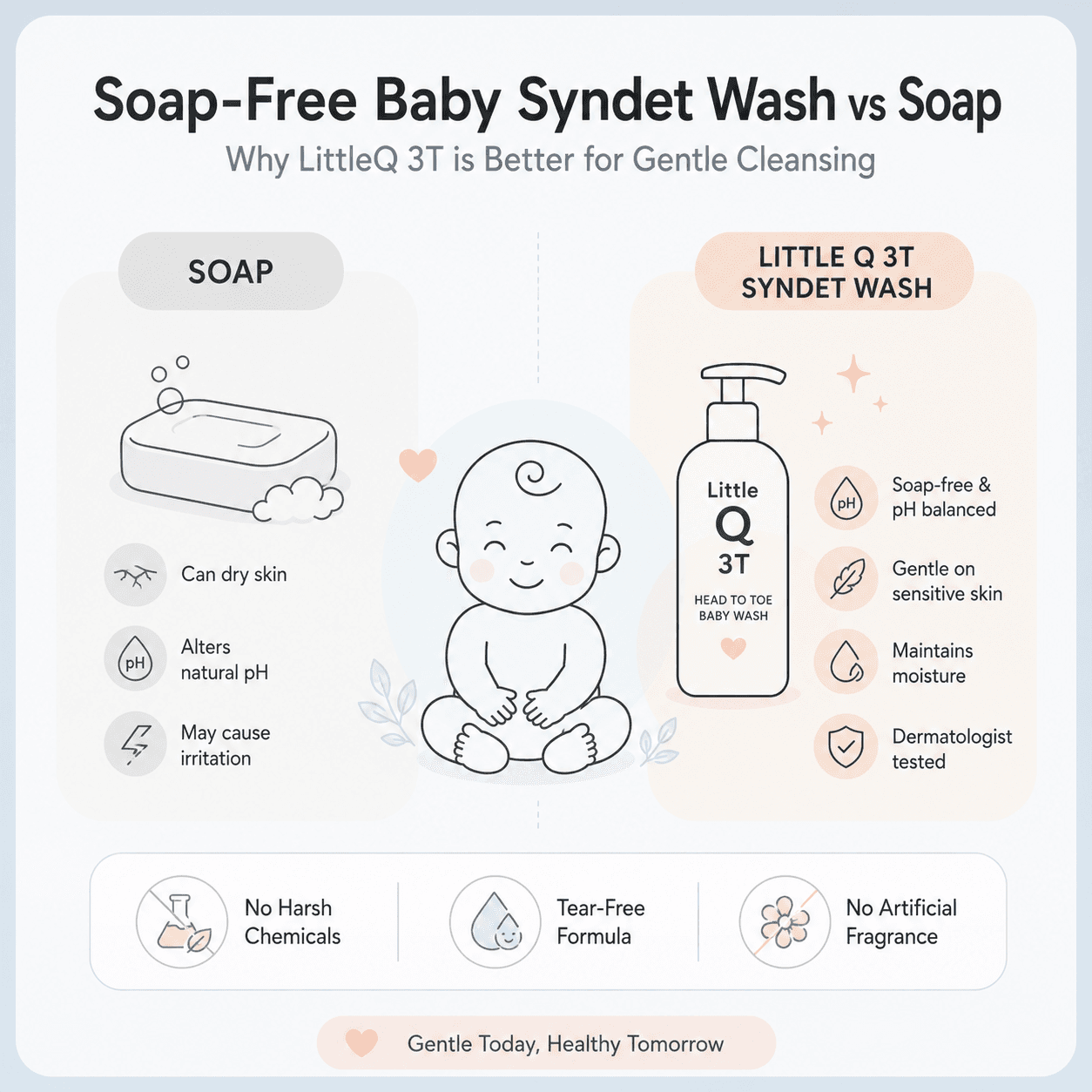
Little Q 3T is a head-to-toe syndet cleanser designed for delicate newborn and sensitive skin. Its formula includes D-Panthenol along with mild cleansing agents such as SCI-85, Decyl Glucoside and Sodium Cocoyl Glycinate. It also lists Ceramide NP, Niacinamide, Hyaluronic Acid, Oat, Calendula, Aloe Vera and Licorice.
Panthenol is not a medicine and does not cure eczema, rash or infection. In a well-formulated cleanser, it supports the product’s skin-conditioning and hydration-focused approach.
This guide explains what panthenol is, how it works on baby skin and why Little Q 3T may be a useful choice for a gentle daily cleansing routine.
Important note: Consult a paediatrician or dermatologist if your baby has persistent dryness, redness, cracking, itching, oozing or another concerning skin symptom.
What Is Panthenol?
Panthenol is the alcohol form of pantothenic acid, also known as vitamin B5. When applied to the skin, it can be converted into pantothenic acid.
In skincare, panthenol is commonly used as:
A humectant.
A moisturising ingredient.
A conditioning agent.
A skin-comfort ingredient.
A support ingredient for barrier care.
Panthenol is available in different forms, including D-panthenol and DL-panthenol. D-panthenol is the biologically active form commonly used in topical skincare products.
The ingredient is popular because it combines several useful properties. It can attract water, support hydration and contribute to a softer skin feel.
Is Panthenol the Same as Pantothenic Acid?
They are closely related but not identical.
Pantothenic acid is vitamin B5. Panthenol is a provitamin that can convert into pantothenic acid in the skin.
The name provitamin B5 is used because of this relationship. In cosmetic formulations, panthenol is valued mainly for its topical moisturising and conditioning properties.
Why Baby Skin Needs Conditioning
Baby skin is still developing. Although a healthy full-term newborn has a functional skin barrier at birth, its structure and water-handling properties continue to mature during infancy.
The skin barrier helps:
Retain water.
Reduce excessive moisture loss.
Protect against environmental irritants.
Reduce friction-related discomfort.
Support a healthy surface environment.
Keep the skin flexible and comfortable.
When the barrier becomes dry or irritated, parents may notice:
Rough cheeks.
Flaking.
Tightness after bathing.
Redness.
Increased sensitivity.
Mild cracking.
Dry patches on the legs or arms.
A cleansing product should remove sweat, dirt and residue without unnecessarily removing natural oils. Conditioning ingredients such as panthenol may help improve the after-bath skin feel.
How D-Panthenol Supports Baby Skin
1. Attracts Water
Panthenol has humectant properties. It helps attract and retain water in the outer layer of the skin.
This can support a smoother and softer surface feel. It does not add a permanent supply of water to the skin, and its effectiveness depends on the complete formulation.
2. Supports Skin Hydration
Research on topical dexpanthenol has shown improvements in stratum-corneum hydration and reductions in transepidermal water loss when used in leave-on formulations.
These results are useful for understanding panthenol’s skincare potential. However, a rinse-off cleanser has shorter contact time than a cream or ointment.
3. Supports Barrier Function
Dexpanthenol has been studied for its potential to improve skin hydration and support barrier function. A review of topical dexpanthenol describes moisturising and barrier-enhancing properties.
In baby skincare, this may be relevant because a healthy barrier helps keep moisture in and external irritants out.
4. Helps Improve Skin Comfort
Panthenol may help reduce the dry, tight feeling associated with cleansing. This is particularly relevant in formulas designed for dry or sensitive skin.
It does not numb the skin or act as a painkiller. “Soothing” in cosmetic language generally means that it supports a comfortable skin feel.
5. Complements Other Moisturising Ingredients
Panthenol works differently from ceramides, glycerin and hyaluronic acid.
Panthenol conditions and supports hydration.
Glycerin attracts and holds water.
Hyaluronic Acid attracts water.
Ceramides support the lipid barrier.
Occlusives reduce water loss.
Emollients soften rough skin.
A formula that combines complementary ingredients may provide a more balanced skincare approach.
Panthenol and the Baby Skin Barrier
The outer layer of skin contains cells surrounded by lipids such as ceramides, cholesterol and fatty acids. This structure is often compared with bricks and mortar.
Skin cells are the bricks.
Lipids are the mortar.
The complete structure forms a protective barrier.
The baby skin barrier may be more vulnerable to hot water, harsh cleansing, friction, dry air, saliva, sweat and diaper exposure.
Panthenol does not replace the skin’s natural lipids. Instead, it supports the hydration and conditioning side of barrier care.
Hydration Is Not the Same as Barrier Repair
A baby may have hydrated skin that still has an impaired barrier. Similarly, the skin may need both water and lipids to remain comfortable.
This is why effective provitamin B5 baby skincare often combines panthenol with ceramides, humectants and emollients.
A cleanser containing panthenol may support the routine, but a leave-on moisturiser may be more important when dryness is significant.
Little Q 3T Formula Explained
D-Panthenol
Little Q 3T lists D-Panthenol in its formula.
D-Panthenol supports the product’s conditioning and hydration-focused profile. In a rinse-off cleanser, it contributes to the overall skin feel, but it should not be treated as a replacement for a therapeutic cream.
Mild Cleansing Agents
Little Q 3T also lists SCI-85, Decyl Glucoside and Sodium Cocoyl Glycinate.
These surfactants help lift dirt, sweat and excess oil from the skin and hair.
A cleanser containing panthenol still needs a mild surfactant system. Panthenol cannot compensate for a formula that is too harsh or used too frequently.
Ceramide NP
Ceramide NP is a skin-conditioning lipid associated with the outer barrier.
In combination with panthenol, it supports the formula’s broader approach to hydration and comfort. Ceramide NP supports lipid structure, while panthenol contributes to conditioning and moisture retention.
Hyaluronic Acid and Glycerin
These are humectants that attract and hold water. They complement panthenol’s moisturising role.
Because the product is rinsed off, the effect is more limited than in a leave-on lotion.
Niacinamide
Niacinamide is a form of vitamin B3 used for conditioning and supporting the appearance of a healthy skin barrier.
Oat, Calendula, Aloe Vera and Licorice
These botanical ingredients are included in the skin-comfort blend. They may appeal to parents looking for a conditioning formula, but natural ingredients can still cause sensitivity.
Is Panthenol Safe for Babies?
Panthenol has been used in topical skincare for many years. Safety assessments and clinical research support its use in appropriately formulated cosmetic products.
The Cosmetic Ingredient Review safety assessment includes panthenol and its derivatives in cosmetic applications, including baby products.
However, the safety of a finished product depends on:
Ingredient concentration.
Complete formula.
Product quality.
Preservatives.
Fragrance.
Intended age.
Rinse-off or leave-on use.
Individual skin sensitivity.
Parents should use products according to the label and avoid applying undiluted raw ingredients directly to a baby’s skin.
Panthenol Versus Other Baby-Skincare Ingredients
Panthenol
Supports conditioning, hydration and a soft skin feel.
Ceramide NP
Supports the lipid structure of the outer skin barrier.
Glycerin
Attracts and holds water in the outer skin layer.
Hyaluronic Acid
Supports hydration by attracting water.
Oat
Commonly used for dry-skin comfort and conditioning.
Petrolatum
An occlusive that helps reduce water loss by forming a protective layer.
These ingredients are not interchangeable. They work through different mechanisms and may be combined in a complete baby skincare routine.
How to Choose a Panthenol Baby Product
Check the Product Type
A cleanser, lotion, cream and ointment should be judged differently. A rinse-off wash cannot provide the same level of sustained contact as a leave-on moisturiser.
Look for D-Panthenol or Panthenol
The label may list Panthenol, D-Panthenol or Dexpanthenol.
Review the Complete Formula
Look for:
Mild surfactants.
Ceramides.
Humectants.
Conditioning ingredients.
Fragrance information.
Preservatives.
Age guidance.
Consider Fragrance
Parents of babies with sensitive or eczema-prone skin may prefer fragrance-free products.
Check the pH
A pH-balanced baby wash may be more compatible with the baby’s natural skin environment than strongly alkaline soap.
Choose a Baby-Specific Formula
Adult skincare products may contain exfoliants, stronger actives or fragrances that are unnecessary for babies.
Building a Gentle Routine
Use Warm Water
Hot water may remove natural oils and worsen dryness. Use comfortably warm water.
Keep Baths Brief
Many babies do not need long baths. A short, gentle bath may be better for dry or sensitive skin.
Use a Small Amount of Cleanser
A gentle baby cleanser should be used sparingly. More product does not mean better cleansing.
Rinse Thoroughly
Rinse from skin folds, the neck, underarms, groin and behind the ears.
Pat the Skin Dry
Avoid rough towels and vigorous rubbing.
Moisturise if Needed
Apply a suitable fragrance-free moisturiser while the skin is slightly damp if dryness is present.
A panthenol-containing cream or ointment may offer longer contact with the skin than a wash-off product.
When to Seek Professional Advice
Contact a paediatrician or dermatologist if the baby has:
Persistent dryness.
Redness that does not improve.
Itching.
Cracked or bleeding skin.
Oozing or crusting.
Blisters.
Facial swelling.
Severe diaper rash.
Repeated reactions to skincare products.
A rash that affects sleep or feeding.
Panthenol may support comfort, but it cannot diagnose the reason for a rash.
Frequently Asked Questions
What is panthenol for babies?
Panthenol is provitamin B5, a cosmetic ingredient used to support hydration, conditioning and skin comfort.
Is D-Panthenol safe in baby wash?
D-Panthenol is widely used in topical skincare and baby products. The safety of the finished product depends on the complete formula and appropriate use.
Does Little Q 3T contain panthenol?
Yes. Little Q 3T lists D-Panthenol among its ingredients.
Can panthenol treat eczema?
No. Panthenol may support hydration and comfort, but eczema may require medical treatment.
Is panthenol better than glycerin?
They perform different roles. Both can support hydration and conditioning, and they may work well together.
Can panthenol repair the baby skin barrier?
Panthenol can support hydration and barrier function, particularly in leave-on formulations. A cleanser alone cannot repair severe barrier damage.
Is a panthenol baby wash enough for dry skin?
It may help provide gentle cleansing and a comfortable after-bath feel, but a leave-on moisturiser may be needed for persistent dryness.
What if my baby reacts to the product?
Stop using it and rinse the skin with clean water. Seek medical advice if the reaction persists, spreads, becomes painful or is accompanied by swelling.
Final Thoughts :Choose Gentle Panthenol Care
Understanding panthenol for babies helps parents see why provitamin B5 is included in many gentle skincare products. Panthenol supports hydration, conditioning and a comfortable skin feel, while research on dexpanthenol has demonstrated potential benefits for skin hydration and barrier function in topical leave-on formulations.pubmed.
Little Q 3T combines D-Panthenol with mild syndet cleansing agents, Ceramide NP, Hyaluronic Acid, Glycerin, Niacinamide and botanical ingredients. This makes it a thoughtful option for parents seeking hydration-supporting newborn skincare.
Because it is a rinse-off cleanser, it should be used as part of a wider routine that includes warm water, brief bathing, gentle drying and moisturising when needed.
Choose Little Q 3T panthenol wash for mild, pH-conscious cleansing designed to support softer, more comfortable baby skin every day.
Disclaimer: The information in this blog is here to help and inform, but it is not a replacement for advice from a doctor or nutritionist. We try to share correct and useful information, but we always suggest talking to your child’s pediatrician or nutritionist for specific advice about their health and nutrition. These professionals know what’s best for your child’s unique needs.