
LittleQ 3T vs Traditional Soap for Baby Sensitive Skin
Compare LittleQ 3T vs traditional soap for baby skin. Learn how syndet cleansing, pH balance and mild ingredients may support sensitive skin.Little Q
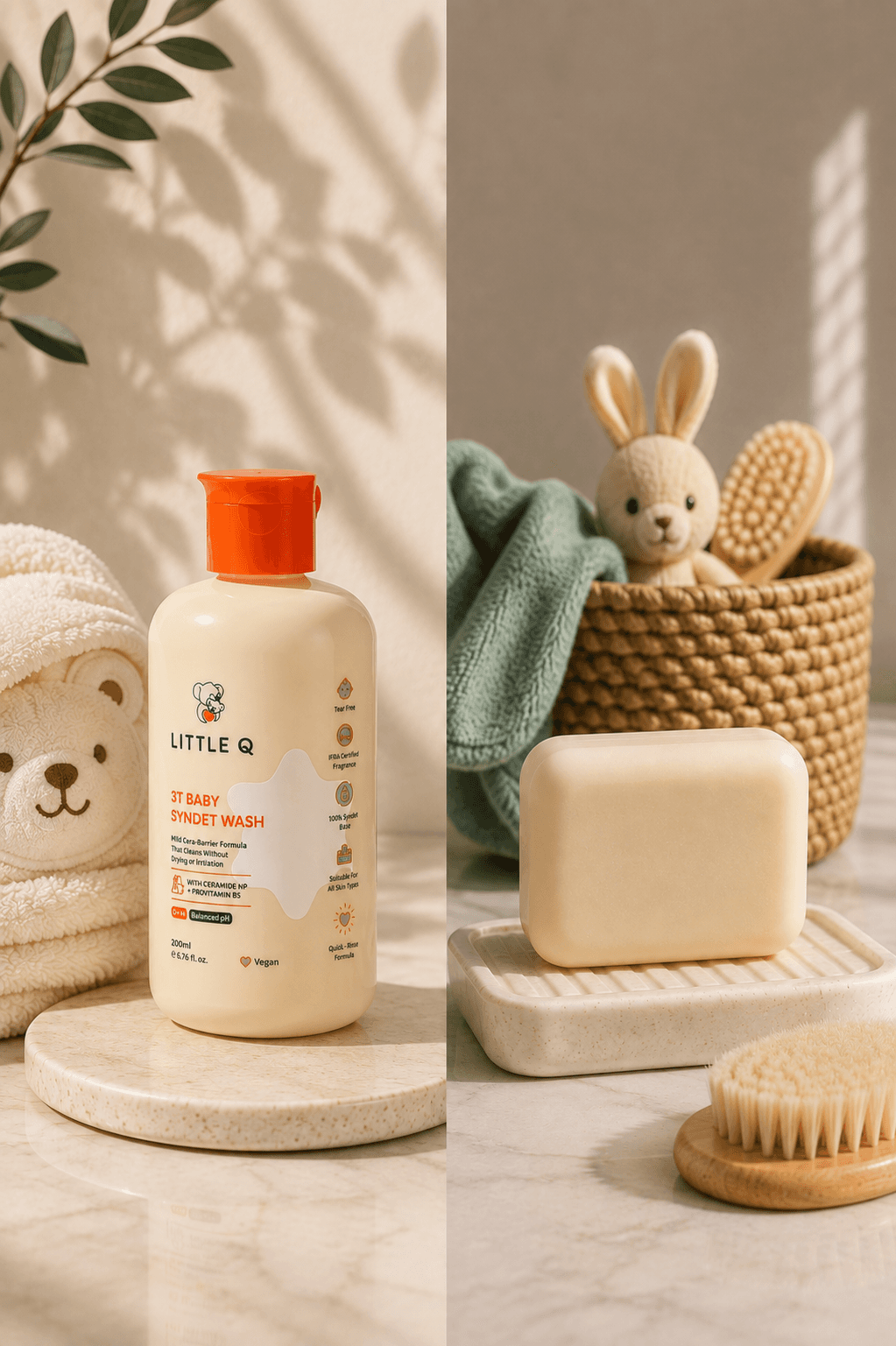
Little Q 3T vs Traditional Soap: Safer for Baby Sensitive Skin?
When parents compare Little Q 3T vs traditional soap, the most important question is not which product creates more foam. It is which cleanser can remove dirt while being gentle on a baby’s developing skin.
Baby skin is thinner, more delicate and more sensitive than adult skin. Traditional soap can be alkaline and may remove some natural oils from the skin. Little Q 3T is a liquid syndet cleanser designed with mild surfactants, a pH-balanced formula and skin-conditioning ingredients.
The Indian Academy of Paediatrics recommends using a synthetic detergent, or syndet, rather than traditional soap for cleansing babies because soap may affect the epidermal barrier. It also recommends liquid cleansers with an acidic or neutral pH for infant skin.
This does not mean that every soap will irritate every baby or that one cleanser is perfect for every child. However, understanding the difference between a syndet and traditional soap can help parents make a more informed decision.
Important note: Little Q 3T is a cleanser, not a medical treatment. Consult a paediatrician or dermatologist for eczema, infection, severe dryness or persistent rashes.
Soap and Syndet: The Basic Difference
Traditional soap and syndet cleansers both remove dirt, sweat and excess oil, but they are made differently.
What Is Traditional Soap?
Traditional soap is usually created by combining fats or oils with an alkaline substance. The finished product is generally alkaline, often with a pH considerably higher than the skin’s natural surface ph.
Soap can clean effectively, but strong cleansing may also remove natural oils and moisture-supporting components from the outer layer of the skin.
What Is a Syndet?
“Syndet” means synthetic detergent. A syndet cleanser uses surfactants designed to help lift dirt and oil from the skin.
A baby syndet wash can be formulated at a neutral or mildly acidic pH, closer to the natural environment of the skin. Research reviews describe syndets as generally milder than traditional soap when they are appropriately formulated.
The word synthetic does not automatically mean harsh or unsafe. In skincare, it describes the type of cleansing ingredients used—not the quality of the finished product.
Why Baby Skin Needs Special Care
A baby’s skin performs the same basic protective functions as adult skin, but it is still maturing. The outer layer helps prevent excess water loss and protects the body from external irritants.
Several factors can affect a baby’s skin:
Frequent bathing, Hot water, Dry weather, Humidity and sweating, Saliva around the mouth and neck, Friction from clothing, Diapers and prolonged moisture, Fragranced products, Harsh laundry detergents, Family history of eczema or allergies
Choosing the right cleanser is only one part of infant skincare, but it can help reduce unnecessary stress on the skin.
This comparison is general. Traditional soaps vary widely, and the complete formula of any cleanser should be reviewed before purchase.
How Traditional Soap Can Affect Baby Skin
1. It May Increase Skin Surface pH
Traditional soap is usually alkaline. When applied to the skin, it can temporarily raise the skin’s surface ph.
The skin’s acid mantle supports normal barrier function. A review of infant cleansing recommendations notes that soap-based cleansers can be alkaline and may affect the skin’s surface environment.
An older infant study comparing an acidic syndet with ordinary soap found that syndet kept infant skin pH within the physiological range for longer after washing.
2. It May Remove Natural Oils
The skin contains natural oils and lipids that help reduce water loss and keep the surface comfortable.
Strong or repeated cleansing can remove some of these components. The result may be dryness, tightness or roughness.
This does not mean that natural oils should never be removed. Babies still need cleansing after sweating, eating, soiling or exposure to dirt. The goal is to remove unwanted residue without excessive stripping.
3. It May Increase Dryness
A baby may show signs of dryness after using a traditional soap, including:
Flaky cheeks.
Rough arms or legs.
Tight-looking skin.
White or greyish patches.
Dryness around the ankles or wrists.
Increased sensitivity after bathing.
If these signs appear repeatedly, parents may consider changing to a mild, soap-free cleanser and discussing persistent symptoms with a healthcare professional.
4. It May Be Less Suitable for Eczema-Prone Skin
Babies with atopic or eczema-prone skin have a greater tendency toward barrier dysfunction. Traditional soap may be uncomfortable for some of these children.
The Indian Academy of Paediatrics states that syndets are preferred in children with skin disorders that affect barrier function, including atopic dermatitis and eczema.
A cleanser alone cannot control eczema. Medical treatment, moisturising and trigger management may also be required.
How Syndet Cleansing Affects Baby Skin:
Supports a More Skin-Compatible pH
A pH-balanced baby wash can be formulated closer to the natural acidic environment of the skin.
This may reduce the amount of pH disturbance caused during bathing. The Indian Academy of Paediatrics recommends acidic or neutral liquid cleansers because they are less likely to affect the acid mantle and barrier function.
Helps Reduce Lipid Disruption
Research comparing soap and syndet cleansing found that repeated soap washing can damage protein and lipid regions of the outer skin layer. Under the study conditions, skin cleansed with syndet showed better preservation of these structures.
This supports the use of mild syndets when parents want to reduce the drying effects associated with traditional soap.
Provides Mild Surfactant Action
Syndet cleansers contain surfactants that help water combine with oil and dirt. This allows impurities to be rinsed away without vigorous scrubbing.
A balanced surfactant system can help clean the skin while reducing unnecessary friction. This is important because rubbing can irritate already dry or reactive skin.
Supports a Comfortable After-Bath Feel
A well-designed syndet may leave the skin feeling less tight after cleansing. Little Q 3T includes moisturising and skin-conditioning ingredients intended to support a soft skin feel.
Since it is a wash-off formula, parents should not consider it a replacement for a leave-on moisturiser when the baby has dry skin.
Little Q 3T Ingredients Explained
SCI-85
SCI-85 is a form of Sodium Cocoyl Isethionate. It is a mild surfactant used in syndet cleansers.
It helps remove dirt, sweat and oil while contributing to a soft lather. Unlike traditional soap, it does not rely on the same alkaline soap-making process.
Decyl Glucoside
Decyl Glucoside is a non-ionic surfactant used in gentle cleansing formulas. It helps lift impurities from the skin and hair.
Parents seeking a gentle baby wash may recognise this type of surfactant in sensitive-skin products. However, every child can react differently to cosmetic ingredients.
Sodium Cocoyl Glycinate
Sodium Cocoyl Glycinate is an amino-acid-based cleansing agent. It contributes to the product’s cleansing performance and overall skin feel.
Little Q 3T combines it with SCI-85 and Decyl Glucoside to create a mild cleansing system.
Ceramide NP
Ceramide NP is a skin-identical lipid associated with the outer skin barrier. Ceramides help support the structure that retains moisture.
Little Q 3T lists Ceramide NP among its skin-conditioning ingredients. Because the product is rinsed off, it should not be compared directly with a leave-on ceramide cream.
D-Panthenol
D-Panthenol, or provitamin B5, is used in skincare for moisturising and conditioning. It can help contribute to a softer after-bath skin feel.
It does not treat eczema or infection, but it supports the gentle-care positioning of the formula.
Hyaluronic Acid and Glycerine
Hyaluronic Acid and Glycerine are humectants. They attract and hold water, helping support hydration.
In a cleanser, their effect is limited by the short contact time with the skin. They still contribute to the product’s hydration-focused formula.
Niacinamide
Niacinamide is a form of vitamin B3 used in skincare for conditioning and supporting the appearance of a healthy skin barrier.
Little Q 3T includes Niacinamide as part of its formula. Its suitability depends on the complete formula and the baby’s individual tolerance.
Oat, Calendula, Aloe Vera and Licorice
These botanical ingredients are commonly associated with skin comfort and conditioning. Little Q 3T lists Oat, Calendula, Aloe Vera and Licorice among its ingredients.
Natural or botanical ingredients are not automatically allergy-free. Parents should be cautious if their baby has a known sensitivity to plant extracts.
Is Little Q 3T Safer for Sensitive Baby Skin?
The word “safer” should be used carefully. No cleanser can be guaranteed to suit every baby.
However, Little Q 3T has features that may make it a reasonable baby wash for sensitive skin:
Syndet-based cleansing.
Soap-free positioning.
pH-balanced formulation.
Mild surfactants.
Head-to-toe use.
Tear-free positioning.
Ceramide NP.
Hydration-supporting ingredients.
Skin-conditioning botanicals.
The best choice depends on the baby’s age, skin condition, allergies and response to the product. Parents should stop using any cleanser that causes persistent redness, itching, swelling or worsening dryness.
When Traditional Soap May Still Be Used
Some families may use a mild soap occasionally, especially when cost, availability or personal preference is important.
The Indian Academy of Paediatrics notes that if there is a cost constraint, a mild soap with low alkaline pH may be used minimally, although soap is best avoided in neonates.
This is different from recommending frequent use of any strongly alkaline soap. Parents should look for products specifically intended for babies and avoid assuming that every “baby soap” is automatically mild.
Common Mistakes Parents Make
Choosing Based Only on Foam
A large amount of lather does not mean the product cleans better. Mild cleansers can work effectively with limited foam.
Using Hot Water
Hot water can increase dryness and discomfort. Warm water is generally more suitable for delicate baby skin.
Bathing Too Frequently
Newborns do not always need a full bath every day. Mayo Clinic notes that bathing around three times a week may be enough for many newborns, while the face, neck and diaper area can be cleaned as needed.
Using Too Many Products
Using several new products at once makes it difficult to identify the cause of irritation. A simple routine is easier to monitor.
Confusing Tear-Free with Eye-Safe
A tear-free formula is designed to reduce stinging, but parents should still avoid deliberate eye contact and rinse with clean water if contact occurs.
Frequently Asked Questions
Is Little Q 3T better than traditional soap?
For many babies with delicate or sensitive skin, a mild syndet may be preferable to traditional alkaline soap. However, the complete formula and the baby’s individual tolerance matter.
Is Little Q 3T suitable for newborns?
Little Q 3T is marketed for delicate newborn and sensitive skin. Parents should check the latest packaging and age instructions. Babies who were premature or have a diagnosed skin condition may need professional advice before using a new cleanser.
Is Little Q 3T a soap-free baby cleanser?
Yes. It is presented as a soap-free syndet cleanser containing mild surfactants.
Can syndet wash prevent eczema?
No cleanser can guarantee eczema prevention. A mild syndet may reduce exposure to harsh soap, but eczema is influenced by genetics, immune response and environmental triggers.
Can traditional soap cause baby skin dryness?
Traditional alkaline soap can remove natural oils and may contribute to dryness or irritation in some babies, particularly when used frequently.
Does pH-balanced mean fragrance-free?
No. pH balance and fragrance are separate features. Parents should check the ingredient list and current packaging.
What if the baby develops a rash?
Stop using the product and rinse the skin with clean water. Consult a healthcare professional if the rash persists, spreads or becomes painful. Seek urgent care for facial swelling, breathing difficulty or widespread hives.
Conclusion:
When comparing Little Q 3T vs traditional soap, the most important difference is the cleansing system. Traditional soap is generally alkaline and may disturb the skin’s pH, remove natural oils and contribute to dryness in some babies. A properly formulated syndet can offer mild cleansing with a pH closer to the skin’s natural environment.
Little Q 3T combines mild surfactants such as SCI-85, Decyl Glucoside and Sodium Cocoyl Glycinate with Ceramide NP, D-Panthenol, Hyaluronic Acid, Glycerine, Niacinamide and botanical ingredients.
For parents seeking a baby soap alternative, Little Q 3T may be a practical choice for head-to-toe cleansing and a simple newborn skincare routine. It should still be introduced thoughtfully, used according to the label and discontinued if irritation occurs.
Disclaimer: The information in this blog is here to help and inform, but it is not a replacement for advice from a doctor or nutritionist. We try to share correct and useful information, but we always suggest talking to your child’s pediatrician or nutritionist for specific advice about their health and nutrition. These professionals know what’s best for your child’s unique needs.