Dermatologist Recommended Baby Wash: Little Q 3T Pediatric Trust
Learn what a dermatologist-recommended baby wash should offer and how Little Q 3T’s pH-balanced syndet formula supports gentle newborn cleansing.Little Q
Dermatologist Recommended Baby Wash: Little Q 3T Pediatric Trust
Choosing a dermatologist recommended baby wash can feel difficult when every bottle promises gentleness, hydration and safety. The most reliable approach is not to search for the most dramatic claim, but to understand what skin specialists generally look for in a cleanser for newborns and sensitive skin.
A thoughtful baby wash should cleanse without stripping the skin, rinse easily and avoid unnecessary irritants. It should also be used in a routine that respects how delicate infant skin can be.
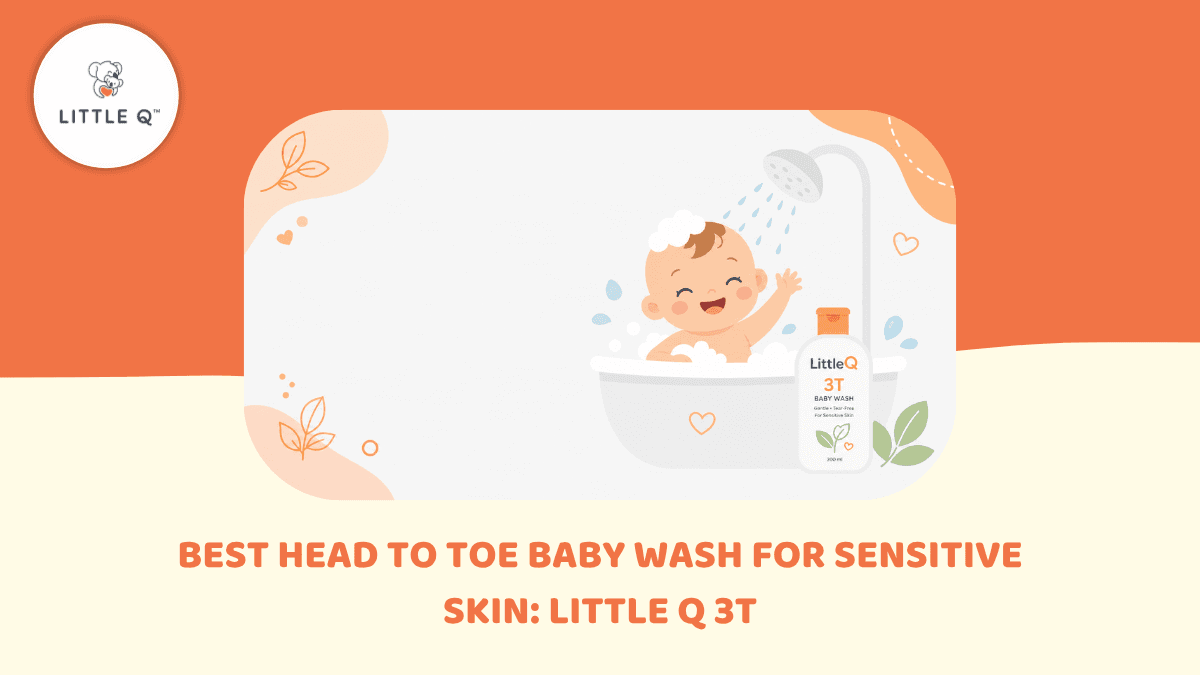
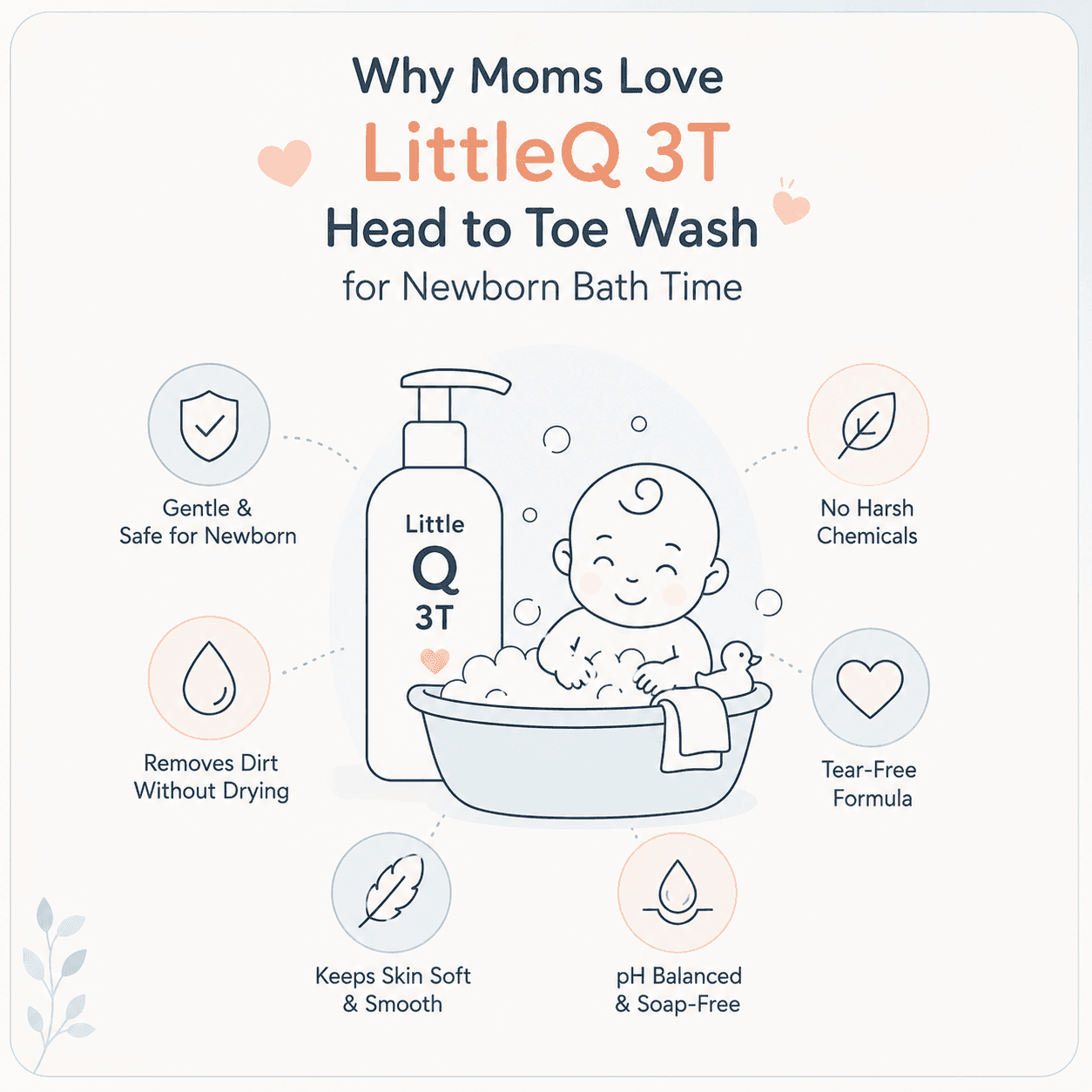
Little Q 3T baby wash is a head-to-toe syndet cleanser designed for delicate newborn and sensitive skin. Its manufacturer describes it as soap-free, pH-balanced, paraben-free and sulfate-free, with mild cleansing agents including SCI-85, Decyl Glucoside and Sodium Cocoyl Glycinate.
This guide explains how Little Q 3T aligns with widely accepted pediatric skincare principles, while keeping the distinction clear: a product can be thoughtfully formulated for babies without automatically being endorsed by every dermatologist.
What “Dermatologist Recommended” Should Mean
The phrase dermatologist recommended baby wash is often used loosely. It may mean that a dermatologist personally recommends a product, that a dermatologist helped develop it, that it was tested under dermatological supervision, or simply that the marketing team believes it meets skin-friendly standards.
These meanings are not the same.
A responsible interpretation is this: a baby wash is a good candidate for a gentle routine when it follows recognised principles of pediatric skin care. It should not be assumed to be medically endorsed unless a named professional, organisation or clinical study is clearly identified.
For Little Q 3T, the official product information describes its intended use and formulation. It does not, in the accessible content, name a specific dermatologist, medical body or clinical trial that endorses the wash.
That is why this article focuses on pediatric trust through formulation principles, not on unverified endorsement claims.
Why Baby Skin Needs a Gentler Routine
Infant skin is still developing during the first months of life. The Royal Children’s Hospital explains that infant skin is thinner and more sensitive than adult skin, which makes it more vulnerable to dryness and irritation.
A baby’s skin barrier helps retain moisture and limit contact with irritants. Everyday factors can challenge it:
Hot water.
Long baths.
Harsh soap.
Excessive rubbing.
Sweat.
Saliva.
Urine and stool.
Dry weather.
Fragrance or other product ingredients.
The goal is not to eliminate all cleansing. It is to cleanse only as needed, using a formula that respects the skin’s natural balance.
This is where a gentle baby cleanser becomes useful. It should remove visible soil without leaving skin feeling tight, dry or uncomfortable.
What Pediatric Guidance Says About Bathing
The American Academy of Pediatrics’ HealthyChildren.org guidance offers practical, widely used advice for newborn bathing.
It notes that newborns do not need daily baths and that around three baths each week during the first year may be enough. More frequent bathing can dry the skin.
The guidance also advises using soap sparingly, because soap can dry a baby’s skin. If a cleanser is needed for heavily soiled areas, it recommends a mild, neutral-pH soap without additives, followed by prompt rinsing.
For newborns, sponge baths are recommended until the umbilical stump falls off. After that, baths should be gentle and brief.
This guidance is important because it places the product in context. Even the mildest cleanser cannot compensate for hot water, long baths, rough towels or excessive washing.
How Little Q 3T Fits a Gentle Cleansing Routine
Little Q 3T is positioned as a baby syndet wash for head-to-toe use. A syndet wash uses non-soap surfactants rather than traditional soap.
The official product page describes it as:
A head-to-toe baby syndet wash.
Suitable for delicate newborn and sensitive skin.
Tear-free.
Soap-free.
pH-balanced.
Paraben-free.
Sulfate-free.
Gentle enough for everyday cleansing.
These claims describe the manufacturer’s positioning. They do not replace a parent’s observation of how their own baby responds.
The product is best understood as a cleanser designed to fit a simple bath routine—not as a treatment for eczema, infection or persistent rash.
The Cleansing System: SCI-85, Decyl Glucoside and More
SCI-85: a syndet cleansing ingredient
Little Q 3T lists SCI-85 among its cleansing ingredients. SCI-85 is a commercial grade of Sodium Cocoyl Isethionate, a surfactant used in syndet cleansers.
Its role is to help lift sweat, surface oil and everyday residue so they can be rinsed away. It can also contribute to a soft, creamy lather.
The number in “SCI-85” is part of a raw-material grade. It should not be read as the percentage of SCI-85 in the finished bottle.
Decyl Glucoside: a non-ionic cleanser
Decyl Glucoside is a non-ionic surfactant that helps remove impurities from skin and hair. Little Q 3T identifies it as one of its cleansing agents.
It is often selected in mild cleansing systems because it can support cleansing without relying on a traditional soap base.
Sodium Cocoyl Glycinate: an amino-acid-based surfactant
Sodium Cocoyl Glycinate is an amino-acid-based surfactant. It contributes to cleansing and can influence foam, rinse behaviour and skin feel.
Why a blend can be useful
A single surfactant does not need to do every job. A blend can help balance cleansing, lather, spreadability and after-wash feel.
The important point for parents is that mildness comes from the finished formulation. It depends on surfactant choice, concentration, pH, fragrance, preservatives and how the product is used.
Barrier and Hydration Support in Little Q 3T
Little Q 3T also includes several conditioning ingredients. The official page highlights Ceramide NP, Niacinamide, D-Panthenol, Hyaluronic Acid, Glycerin, Oat, Calendula, Aloe Vera and Licorice.
Ceramide NP and the baby skin barrier
Ceramides are lipids that occur naturally in the outer layer of skin. They help form part of the structure that limits water loss and supports barrier function.
Little Q 3T includes Ceramide NP as part of its formula.
A useful way to picture the barrier is a wall:
Skin cells are the bricks.
Lipids, including ceramides, are the mortar.
Together, they help keep moisture in and irritants out.
Because Little Q 3T is a rinse-off wash, Ceramide NP should not be treated as a substitute for a leave-on moisturiser. If a baby’s skin is dry, a suitable moisturiser may still be needed.
Glycerin, Hyaluronic Acid and D-Panthenol
These ingredients support the formula’s hydration and comfort profile:
Glycerin is a humectant that attracts and holds water.
Hyaluronic Acid also supports hydration.
D-Panthenol, or provitamin B5, is used for conditioning and moisturising support.
Their presence does not mean the wash moisturises for a specific number of hours. A “24-hour hydration” claim would require testing of the finished product, not inference from the ingredient list.
Niacinamide
Niacinamide is vitamin B3 and is used in cosmetics for skin-conditioning purposes. Little Q 3T lists it among its ingredients.
As with all ingredients, its effect depends on the complete formula and how the product is used.
Fragrance, Botanicals and Sensitive-Skin Considerations
Little Q 3T contains botanical ingredients including Oat, Calendula, Aloe Vera and Licorice. Its packaging also carries an IFRA-certified fragrance claim.
Why fragrance deserves attention
“IFRA certified” relates to fragrance-industry standards. It does not mean a product is fragrance-free, allergy-proof or suitable for every baby.
For babies with eczema, known fragrance sensitivity or repeated irritation, the Royal Children’s Hospital recommends choosing products without fragrance, botanicals or antibacterial agents where possible, because these may irritate infant skin.
This does not mean every baby will react to fragrance or botanicals. It means parents should assess these ingredients individually, especially if their child has reactive skin.
Botanicals are not automatically risk-free
Oat, Calendula, Aloe Vera and Licorice are commonly used in cosmetic formulas. They may be well tolerated by many babies.
However, “natural” does not mean universally safe. A baby with a plant allergy or a history of contact dermatitis may respond differently.
If your baby has eczema, a known allergy or a history of reactions, ask a paediatrician or dermatologist before introducing a new multi-ingredient wash.
How to Use a Baby Wash Safely
A good newborn bath routine is simple and consistent.
Prepare warm water, a clean towel and the wash before starting.
Keep baths short and use comfortably warm—not hot—water.
Use only a small amount of cleanser.
Clean visibly soiled areas, skin folds and the diaper area gently.
Avoid scrubbing with sponges or rough cloths.
Rinse thoroughly so no product remains in folds.
Pat the skin dry rather than rubbing.
Apply a suitable moisturiser if the skin feels dry.
Introduce one new product at a time.
Stop and seek advice if irritation occurs.
The American Academy of Pediatrics recommends patting a baby dry and applying a small amount of fragrance-free, hypoallergenic moisturising lotion after bathing to help prevent dry skin or eczema.
Choosing Between Products: A Practical Checklist
Rather than comparing products through a table, use these questions as a mental checklist.
First, check suitability. Is the product intended for your baby’s age? Does it suit your baby’s skin type and any diagnosed condition?
Second, examine the cleansing base. Is it soap-free or syndet-based? Does it use mild cleansing agents rather than traditional alkaline soap?
Third, consider the full formula. Does it contain fragrance, botanicals, dyes or other ingredients that may matter for your baby?
Fourth, review practical claims. Is it pH-balanced? Is it easy to rinse? Is the tear-free claim supported by clear directions?
Fifth, assess transparency. Is the full ingredient list available? Are manufacturer details, batch information and expiry details clear?
Finally, observe your baby. A product that looks ideal on paper may not suit every child. Comfortable skin, easy rinsing and no irritation are more meaningful than marketing language.
Little Q 3T performs well against several of these principles: it is described as a soap-free, pH-balanced syndet cleanser with mild surfactants and barrier-related conditioning ingredients.
Frequently Asked Questions
1. Is Little Q 3T dermatologist recommended?
The available official product information describes Little Q 3T as a gentle syndet wash for delicate newborn and sensitive skin. It does not, in the accessible content, name a dermatologist or medical organisation that endorses it.
2. What should a dermatologist recommended baby wash contain?
A suitable baby wash generally uses mild cleansing agents, avoids unnecessary irritants, rinses easily and is appropriate for the baby’s age. For sensitive or eczema-prone skin, a clinician may prefer a simpler fragrance-free formula.
3. Is Little Q 3T a soap-free baby wash?
Yes. The manufacturer describes it as a soap-free, pH-balanced syndet cleanser.
4. Can Little Q 3T treat eczema?
No. A baby wash is a cleanser, not a treatment. If your baby has persistent dryness, itching, redness or eczema, consult a paediatrician or dermatologist.
5. How often should I bathe my newborn?
Newborns do not need daily baths. The American Academy of Pediatrics notes that around three baths per week during the first year may be enough, and that frequent bathing can dry the skin.
6. Is pH-balanced the same as pH 5.5?
No. “pH-balanced” does not disclose a precise value. The accessible Little Q 3T product description does not specify a numeric pH.
7. Does Little Q 3T contain fragrance?
The product packaging carries an IFRA-certified fragrance claim. That means it should not be assumed to be fragrance-free. Check the current label if fragrance avoidance matters for your baby.
8. What should I do if my baby reacts to a wash?
Stop using the product, rinse gently and avoid introducing several new products at once. Seek medical advice if the rash persists, spreads, becomes painful or your baby seems unwell.
Finalthoughts:
A dermatologist recommended baby wash should be chosen for more than a persuasive label. It should fit a gentle routine, use an appropriate cleansing system and respect the needs of delicate infant skin.
Little Q 3T baby wash aligns with several widely accepted pediatric skincare principles: it is a soap-free, pH-balanced syndet cleanser, uses mild cleansing agents and includes conditioning ingredients such as Ceramide NP, D-Panthenol, Hyaluronic Acid and Niacinamide.
The strongest form of trust is informed use. Read the label, follow gentle bathing habits and choose products based on your baby’s individual skin needs.
Choose Gentle, Informed Baby Care
Explore Little Q 3T baby wash, review its current label and use it as part of a simple, skin-respecting bath routine. For eczema, allergies or persistent irritation, involve your paediatrician or dermatologist before making changes.
Disclaimer: The information in this blog is here to help and inform, but it is not a replacement for advice from a doctor or nutritionist. We try to share correct and useful information, but we always suggest talking to your child’s paediatrician or nutritionist for specific advice about their health and nutrition. These professionals know what’s best for your child’s unique needs.