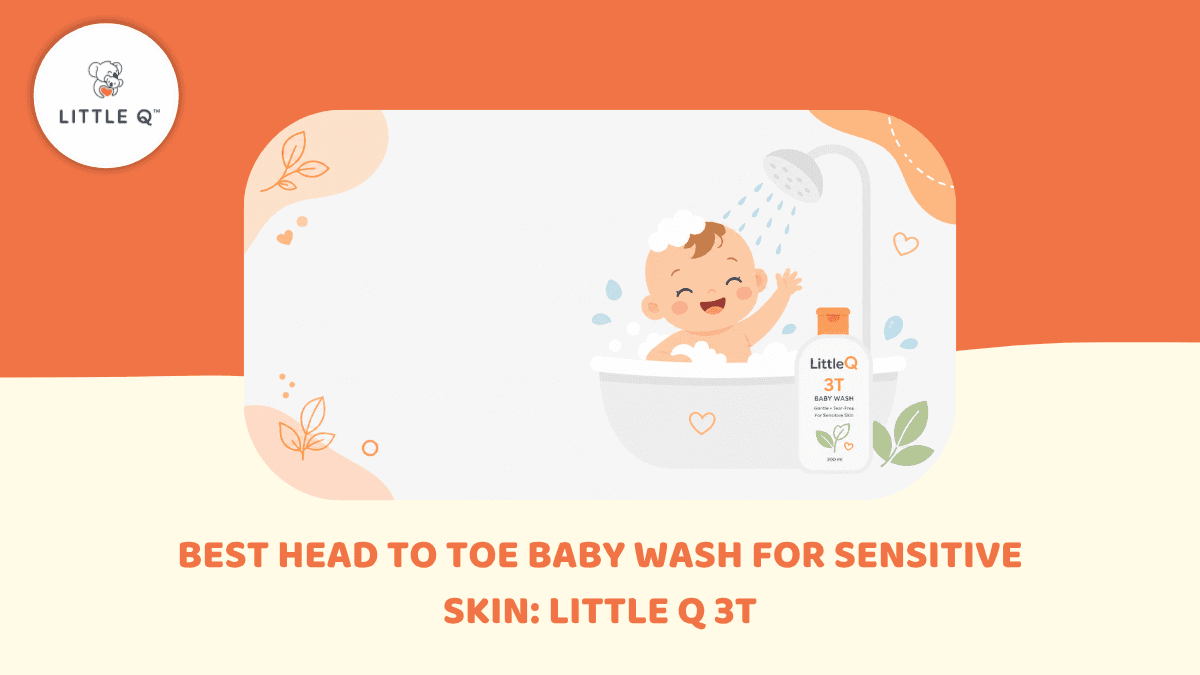

Ceramide NP Benefits: Little Q 3T Skin Barrier Protection
Discover Ceramide NP benefits and learn how Little Q 3T supports the baby skin barrier with gentle cleansing and skin-conditioning care.Little Q
Ceramide NP Benefits: Little Q 3T Skin Barrier Protection
Parents often look for baby skincare products that do more than remove dirt. They want a cleanser that helps keep the skin feeling soft, comfortable and protected after bathing.
One ingredient that has become important in modern skincare is Ceramide NP. Understanding the Ceramide NP benefits can help parents understand why ceramides are included in some baby cleansers and moisturisers.
Ceramides are naturally occurring lipids found in the outer layer of the skin. They help support the structure that retains moisture and protects against external irritants.
Little Q 3T is a head-to-toe syndet cleanser designed for delicate newborn and sensitive skin. Its product information lists Ceramide NP along with mild cleansing agents such as SCI-85, Decyl Glucoside and Sodium Cocoyl Glycinate. The formula also includes Niacinamide, D-Panthenol, Hyaluronic Acid, Oat, Calendula, Aloe Vera and Licorice.
This guide explains what Ceramide NP is, how it supports the skin barrier and how Little Q 3T may fit into a simple, barrier-conscious baby skincare routine.
Important note: Little Q 3T is a cosmetic cleanser, not a treatment for eczema, infection or severe dryness. Consult a paediatrician or dermatologist if your baby has persistent, painful or worsening skin symptoms.
What Is Ceramide NP?
Ceramide NP is one specific type of ceramide used in skincare formulations.
Ceramides are lipids, or fat-like molecules, naturally found in the outer layer of the skin. They are located between skin cells in the stratum corneum, where they help form an organised lipid structure.
A simple way to imagine the outer skin barrier is as a brick wall:
Skin cells are the bricks.
Ceramides, cholesterol and fatty acids are the mortar.
The complete structure helps keep moisture inside and irritants outside.
Ceramide NP is not a cleanser, exfoliant or fragrance. It is a conditioning ingredient used to support the skin barrier.
Little Q 3T lists Ceramide NP among its formula ingredients. Its role should be understood as part of the product’s barrier-support positioning.
Why Ceramides Matter for Baby Skin
Infant skin is thinner and still developing. Although a healthy full-term newborn has a functional barrier at birth, its structure and water-handling properties continue to mature during infancy.
The barrier helps:
Reduce transepidermal water loss.
Maintain moisture.
Protect against external irritants.
Support comfortable skin texture.
Limit the effect of friction and environmental exposure.
Support the skin’s normal surface environment.
A 2020 expert consensus stated that infant skincare should include safe, effective products that support the skin’s lipid and water content. It specifically identified ceramides as important ingredients for maintaining the protective skin barrier.
What Happens When Ceramides Are Low?
A reduction in ceramide content may be associated with dry or barrier-disrupted skin. When the lipid structure is weakened, water can escape more easily.
The skin may then become:
Rough.
Tight.
Flaky.
More sensitive.
Itchy.
Prone to irritation.
Ceramides do not work alone. Cholesterol, free fatty acids, natural moisturising factors and water content also contribute to healthy skin.
Ceramide NP Benefits for Baby Skin
1. Supports Moisture Retention
One of the main Ceramide NP benefits is support for the lipid structure that helps slow moisture loss.
Ceramides do not simply add water to the skin. Instead, they help support the structure that keeps water from escaping too quickly.
This is different from the role of humectants such as Glycerin or Hyaluronic Acid, which attract and hold water.
2. Supports the Outer Barrier
Ceramide NP contributes to the intercellular lipid matrix in the outer skin layer.
A healthy lipid matrix helps the skin remain flexible and better able to handle everyday exposure to water, clothing, sweat and environmental changes.
3. Helps Maintain Soft Skin
When the outer barrier retains moisture effectively, the skin may feel softer and less rough.
A ceramide baby wash may support a comfortable after-bath feel, especially when combined with mild cleansing agents and a suitable moisturising routine.
4. Supports Barrier-Conscious Cleansing
Cleansing can remove dirt and sweat, but it can also remove some surface oils. A formula that includes barrier-supporting ingredients may be more appealing to parents who want to reduce the dry feeling associated with bathing.
Little Q 3T combines Ceramide NP with a syndet cleansing base.
5. Complements Dry-Skin Care
Ceramides are commonly used in products for dry and sensitive skin. Expert consensus supports the use of gentle cleansers and moisturisers containing barrier lipids as part of infant skincare.
A cleanser is only one part of this approach. A leave-on cream or ointment may provide longer contact with the skin.
6. Supports Eczema-Prone Skin Routines
Ceramide-containing skincare may be useful as an adjunct to treatment for atopic dermatitis. A 2024 paediatric dermatology consensus reported that daily moisturisers containing lipids such as ceramides may reduce the severity of atopic dermatitis and extend the time between flares in some children.
This does not mean that a ceramide cleanser prevents or cures eczema. Babies with eczema need a plan guided by a healthcare professional.
Ceramide NP Versus Other Moisturising Ingredients
Different ingredients support skin in different ways.
Ceramide NP
Supports the lipid structure of the outer skin barrier.
Glycerin
A humectant that attracts and holds water.
Hyaluronic Acid
A humectant that supports water retention in the outer skin layers.
D-Panthenol
A conditioning ingredient that supports a soft, moisturised skin feel.
Oat
A botanical ingredient commonly used for dry-skin comfort and conditioning.
Occlusives
Ingredients such as petrolatum can form a protective layer that helps reduce water loss.
A complete moisturising formula may combine several of these ingredient categories.
Little Q 3T Formula Explained
Mild Cleansing Agents
Little Q 3T lists SCI-85, Decyl Glucoside and Sodium Cocoyl Glycinate as cleansing agents.
These surfactants help lift sweat, dirt and excess oil from the skin and hair. They are used in a syndet system rather than a traditional alkaline soap base.
A mild cleansing system is important because Ceramide NP cannot compensate for an excessively harsh cleansing formula.
Ceramide NP
Ceramide NP supports the product’s barrier-conscious approach.
Because Little Q 3T is a rinse-off cleanser, its Ceramide NP should not be compared directly with a leave-on ceramide cream. It is one supporting ingredient within the complete formulation.
Niacinamide
Niacinamide is a form of vitamin B3 used in skincare for conditioning and supporting the appearance of a healthy skin barrier.
D-Panthenol
D-Panthenol, also known as provitamin B5, is used for moisturising and conditioning support.
Hyaluronic Acid and Glycerin
These humectants attract and hold water, supporting the formula’s hydration profile.
Oat, Calendula, Aloe Vera and Licorice
These botanical ingredients are included as part of the skin-comfort blend. Natural ingredients may still cause sensitivity in some babies.
Why the Complete Formula Matters
Parents should not select a product only because it contains Ceramide NP. The whole formula determines how the cleanser behaves.
Consider:
The cleansing agents.
The product’s pH.
Fragrance.
Preservatives.
Botanical extracts.
Dyes.
Contact time.
Rinseability.
Age suitability.
The baby’s skin condition.
A pH-balanced baby wash may be more compatible with the skin’s natural surface environment than strongly alkaline soap.
A soap-free baby wash may also be preferable for babies whose skin feels dry or tight after traditional cleansing.
Building a Barrier-Supportive Routine
Use Gentle Cleansing
Use a gentle baby cleanser only when needed and according to the product directions. A baby does not necessarily need a full cleanser-based bath every day.
Use Warm Water
Hot water can remove natural oils and increase dryness. Use comfortably warm water.
Keep Baths Brief
Short baths may help limit moisture loss. Many babies do not need long bathing sessions.
Avoid Scrubbing
Use clean hands or a soft cloth. Do not scrub rough or flaky patches.
Rinse Thoroughly
Rinse cleanser from the neck, underarms, groin, behind the ears and other folds.
Pat Dry
Use a soft towel and pat the skin dry. Rubbing can increase friction.
Apply a Moisturiser if Needed
A baby moisturiser after bath may help dry skin retain moisture. Apply a suitable fragrance-free cream or ointment while the skin is still slightly damp.
Thick creams and ointments may be more effective than thin lotions for very dry skin.
Keep Clothing Soft
Use breathable, comfortable fabrics. Avoid rough wool or tight clothing that rubs against the skin.
Who May Benefit from Ceramide Care?
A ceramide-containing routine may appeal to parents of babies who experience:
Dryness after bathing.
Rough cheeks or legs.
Seasonal dryness.
Sensitivity to traditional soap.
A family history of eczema.
Mild skin-barrier weakness.
Frequent exposure to air-conditioning or dry weather.
A baby wash for sensitive skin should be part of a simple routine, not a reason to add many new products at once.
How to Choose Ceramide Baby Products
Check the Product Type
Determine whether the product is a cleanser, moisturiser, balm or ointment. A rinse-off wash should not be expected to perform like a leave-on cream.
Look for the Ceramide Type
The label may list Ceramide NP or another ceramide subtype. The ingredient name confirms presence but does not reveal the concentration.
Review the Complete Formula
Look for mild surfactants, suitable pH, fragrance information and age guidance.
Consider Fragrance
Parents of babies with eczema or highly reactive skin may prefer fragrance-free products.
Check the Manufacturer Information
Reliable packaging should include:
Full ingredient list.
Manufacturer details.
Batch number.
Expiry information.
Age guidance.
Usage directions.
Warnings.
Introduce One Product at a Time
If several new products are introduced together, it is difficult to identify the cause of any reaction.
Common Misconceptions
“Ceramide Means Immediate Repair”
Ceramides support the skin barrier, but they do not instantly repair every dry patch.
“A Ceramide Wash Replaces Moisturiser”
A wash is rinsed away. A moisturiser remains on the skin longer.
“More Ceramide Is Always Better”
The complete formulation, concentration and delivery system matter.
“Ceramide Prevents Every Eczema Flare”
Ceramide-containing moisturisers may help reduce severity or delay flares in some children, but they do not guarantee prevention.
“Natural Ingredients Are Always Safer”
Botanicals can still cause allergy or irritation. The baby’s individual response matters.
Frequently Asked Questions
What are the main Ceramide NP benefits?
Ceramide NP supports the lipid structure of the skin barrier, helps reduce moisture loss and may contribute to softer, more comfortable skin.
Is Little Q 3T a ceramide baby wash?
Little Q 3T lists Ceramide NP in its formula and is marketed as a syndet cleanser for delicate newborn and sensitive skin.
Can Ceramide NP treat eczema?
No. It may support an eczema-care routine, but it is not a treatment. Consult a paediatrician or dermatologist for eczema management.
Is Ceramide NP safe for babies?
Ceramide NP is used in cosmetic skincare, including products intended for infants. The safety of a finished product depends on the complete formulation, quality and use according to the label.
Does a ceramide cleanser moisturise the skin?
It may support a comfortable after-bath feel, but it is rinse-off. A leave-on moisturiser may be needed for dry skin.
How often should I bathe my baby?
Many newborns do not need a full bath every day. Two or three full baths per week may be enough for many babies, with the face, neck and diaper area cleaned as needed.
What should I do if my baby reacts to Little Q 3T?
Stop using the product and rinse the skin with clean water. Seek professional advice if redness, swelling, itching or rash persists.
Can I use a ceramide cream with Little Q 3T?
A suitable leave-on moisturiser may complement a gentle cleanser. Choose a product appropriate for your baby’s age and skin, and follow professional advice for eczema or severe dryness.
Final Thoughts :Choose Barrier-Supportive Care
The main Ceramide NP benefits relate to supporting the lipid structure of the skin barrier. Ceramide NP helps the outer skin retain moisture and remain better protected against everyday environmental stress.
Little Q 3T combines Ceramide NP with mild syndet surfactants, D-Panthenol, Hyaluronic Acid, Glycerin, Niacinamide and botanical ingredients. This makes it a practical option for parents seeking a barrier-conscious cleanser for delicate baby skin.
For the best results, combine gentle cleansing with warm, brief baths, careful drying, soft clothing and a suitable moisturiser when dryness is present. If your baby has persistent eczema, severe dryness or a concerning rash, seek professional advice.
Choose Little Q 3T Ceramide wash for mild, pH-conscious cleansing designed to support soft, comfortable and healthy-looking baby skin.
Disclaimer: The information in this blog is here to help and inform, but it is not a replacement for advice from a doctor or nutritionist. We try to share correct and useful information, but we always suggest talking to your child’s pediatrician or nutritionist for specific advice about their health and nutrition. These professionals know what’s best for your child’s unique needs.