
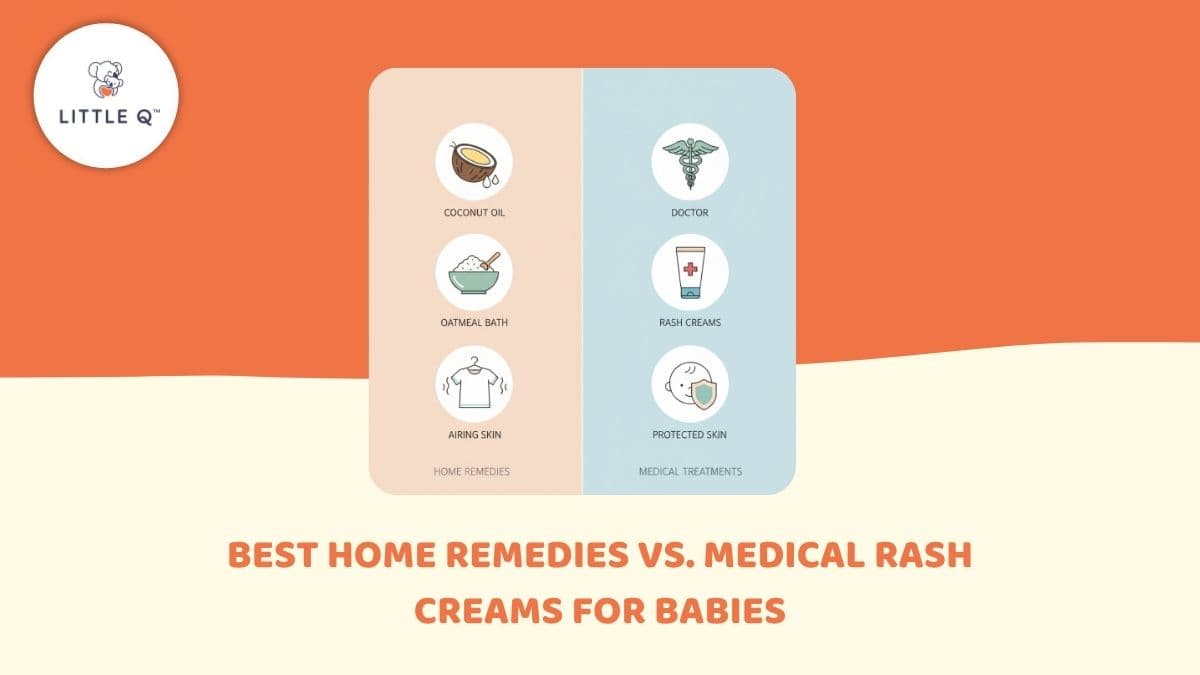
Best Home Remedies vs. Medical Rash Creams for Babies
Find out whether home remedies or medical rash creams are better for baby diaper rash. Understand what truly works for your baby’s delicate skin — safely and gently.Little Q
If you’re a parent, you’ve probably faced the sight of your baby’s soft skin turning red, irritated, or bumpy from a diaper rash. The moment it happens, you want quick relief — and that’s when the big question arises:
Should you try home remedies or use a medical rash cream?
Both have their supporters. Some parents swear by natural ingredients like coconut oil or aloe vera, while others prefer zinc oxide-based baby rash creams recommended by doctors.
So, which one truly works better for your baby’s sensitive skin? Let’s break it down gently and clearly — so you can make an informed choice for your little one.
Understanding What Causes Baby Rashes
Before comparing remedies, it helps to know why rashes appear in the first place. Baby skin is much thinner and more sensitive than adult skin. It easily reacts to:
Prolonged wetness from diapers
Friction or rubbing from tight clothing or diapers
Irritation from urine or stool
Chemical exposure from soaps, wipes, or laundry detergents
Heat and sweat trapped under the diaper area
These factors break down the skin’s natural barrier, leading to inflammation, redness, and discomfort.
That’s why both home remedies and medical rash creams focus on the same goal — healing the skin barrier and keeping it protected.
Home Remedies for Baby Rashes
Home remedies are popular because they’re easily available, gentle, and often free from harsh chemicals. Let’s look at the most trusted ones — and where they work best.
1. Coconut Oil
Coconut oil is one of the oldest remedies for baby skin care. It’s anti-inflammatory, antibacterial, and deeply moisturizing. Applying a thin layer after each diaper change can help keep the skin soft and reduce irritation.
Benefits:
Forms a natural moisture barrier
Soothes redness
Hydrates dry patches
Limitations:
May not work for severe rashes
Takes time to show results
2. Aloe Vera Gel
Pure aloe vera gel is known for its cooling and soothing properties. It calms inflamed skin and reduces itching.
Benefits:
Helps relieve burning sensation
Hydrates the skin gently
Ideal for mild irritation
Limitations:
Needs to be pure and chemical-free
May not prevent future rashes effectively
3. Breast Milk
Yes, breast milk can do more than nourish. It’s packed with antibodies and natural enzymes that help heal minor skin rashes. Applying a few drops on the rash area and letting it air dry can soothe mild irritation.
Benefits:
Natural and safe
Reduces inflammation
No side effects
Limitations:
Not effective for moderate or severe rashes
Works best as a temporary relief option
4. Oatmeal Baths
Oatmeal has natural anti-itch and anti-inflammatory properties. Adding finely ground oatmeal to your baby’s bathwater can calm irritated skin and reduce redness.
Benefits:
Gently cleanses and soothes skin
Prevents dryness
Great for overall baby skin health
Limitations:
Messy to prepare
May not protect against wetness from diapers
5. Shea Butter
Rich in vitamins A and E, shea butter moisturizes deeply and helps restore the skin barrier.
Benefits:
Nourishes sensitive skin
Keeps diaper area soft
Can be used daily
Limitations:
Doesn’t provide a strong barrier like zinc oxide
May not prevent rash caused by prolonged wetness
Medical Rash Creams for Babies
While home remedies can be effective for mild rashes, medical rash creams are designed for both prevention and treatment. They often include clinically tested ingredients like zinc oxide, calendula extract, and plant-based squalene.
Let’s understand how these creams work and why many pediatricians recommend them.
1. Zinc Oxide Creams
Zinc oxide forms a protective barrier between the baby’s skin and moisture. It prevents urine and stool from irritating the skin while helping the rash heal faster.
Benefits:
Provides instant protection
Heals existing rashes
Prevents future rashes
Safe for newborns
2. Calendula-Based Creams
Calendula is a natural flower extract known for its soothing and healing effects. It helps reduce redness and speeds up recovery.
Benefits:
Gentle on delicate skin
Reduces inflammation naturally
Adds hydration
3. Creams with Plant-Based Oils
Some modern rash creams use plant-based oils like squalene, sesame oil, or almond oil. These keep the skin moisturized and smooth while working alongside zinc oxide.
Benefits:
Deep hydration
Strengthens skin barrier
Non-sticky and lightweight
4. Combination Rash Creams
Many high-quality products, like Little Q Diaper Rash Cream, combine zinc oxide, calendula extract, and plant-based squalene. This combination not only protects and heals but also keeps your baby’s skin moisturized and healthy.
Benefits:
Multi-action protection
Free from parabens and sulfates
Ideal for daily use
Home Remedies vs. Medical Rash Creams: A Real Comparison
FactorHome RemediesMedical Rash Creams
Safety
100% natural, safe when pure
Clinically safe, tested for baby skin
Ease of Use
Needs preparation and consistency
Ready to use anytime
Effectiveness
Best for mild rashes
Works for mild to severe rashes
Protection
Offers light moisture barrier
Strong, long-lasting barrier
Healing Speed
Slower, gradual improvement
Faster visible relief
Suitability for Newborns
Suitable for daily care
Specially formulated for sensitive skin
Convenience
May require multiple ingredients
Single, balanced formula
Conclusion:
Both options have value — but medical rash creams, especially zinc oxide-based ones, provide faster relief, better prevention, and longer-lasting protection.
Home remedies are great for maintaining healthy skin, while medical creams are your best defense during rash flare-ups.
When to Use Home Remedies and When to Switch to a Cream
Here’s a simple guide to help you decide:
Use Home Remedies When:
The rash is mild and just beginning.
You prefer a gentle, preventive approach.
You have access to fresh, pure ingredients.
You’re maintaining skin health daily.
Use Medical Rash Creams When:
The rash looks red, bumpy, or irritated.
Your baby feels discomfort during diaper changes.
The rash hasn’t improved in 24–48 hours.
You want faster healing and longer protection.
How to Use Rash Cream Effectively
Even the best product won’t work unless used properly. Here’s how to get the most out of your baby rash cream:
Clean the diaper area gently using a soft, wet cloth or fragrance-free baby wipes.
Let it air dry completely before applying any product.
Apply a thin, even layer of rash cream over the affected area.
Reapply after every diaper change — especially after night-time changes.
Allow diaper-free time daily to let the skin breathe.
With regular use, you’ll notice visible improvement in your baby’s comfort and skin texture.
Why Many Parents Prefer Medical Rash Creams
Today’s baby rash creams are designed keeping sensitive skin in mind. They’re:
Free from parabens, alcohol, and harsh preservatives
Hypoallergenic and fragrance-controlled
Infused with healing botanicals like calendula and squalene
Dermatologically tested for infants
For example, Little Q Diaper Rash Cream uses Zinc Oxide, Calendula Extract, and Plant-Based Squalene — creating a balanced, safe, and effective formula for protecting delicate baby skin from rashes, wetness, and irritation.
Blending Both Approaches: The Best of Both Worlds
You don’t always have to choose between home remedies and medical creams — sometimes combining them works best.
For instance:
Use coconut oil or shea butter after bath time to keep skin soft.
Use a zinc oxide rash cream during diaper changes for strong protection.
This ensures continuous care — natural nourishment plus effective medical protection.
Tips to Prevent Baby Rashes Altogether
Change diapers frequently.
Never leave a wet diaper on for too long.
Use gentle baby wipes or plain water.
Avoid alcohol or fragrance-based wipes.
Let skin breathe.
Give diaper-free time daily for at least 15–20 minutes.
Use the right size diaper.
Tight diapers can cause friction and worsen rashes.
Apply a rash cream as a preventive barrier.
Even when the skin looks fine, a thin layer of zinc oxide cream can stop irritation before it begins.
Final Thoughts
Every baby’s skin is unique, and what works for one may not work for another. Home remedies are wonderful for mild irritation and daily care, while medical rash creams are designed for reliable protection and quick healing.
For the most balanced care, choose a baby-safe rash cream that combines zinc oxide with natural ingredients.
A formula like Little Q Diaper Rash Cream is gentle enough for everyday use and powerful enough to fight even stubborn diaper rashes — keeping your baby’s skin soft, calm, and happy.
Disclaimer: The information in this blog is here to help and inform, but it is not a replacement for advice from a doctor or nutritionist. We try to share correct and useful information, but we always suggest talking to your child’s pediatrician or nutritionist for specific advice about their health and nutrition. These professionals know what’s best for your child’s unique needs.